The Origins of the Modern World
A Global and Environmental Narrative from the Fifteenth to the Twenty-First Century
- Textbook
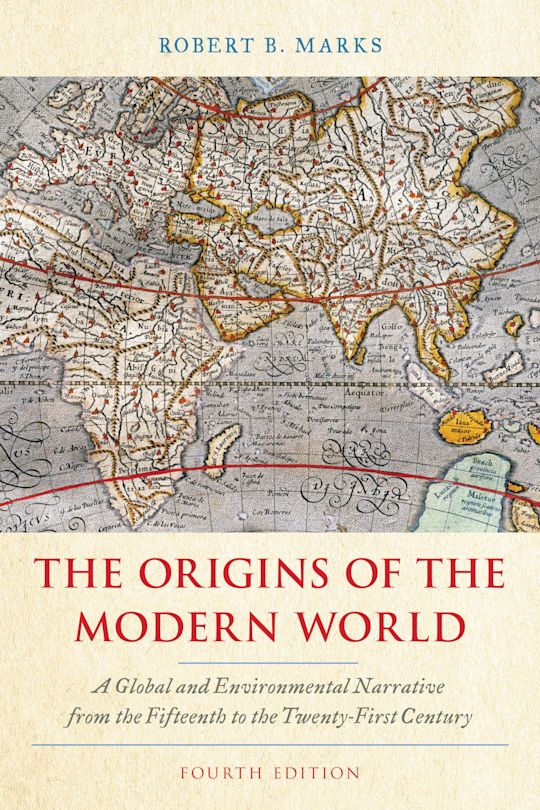

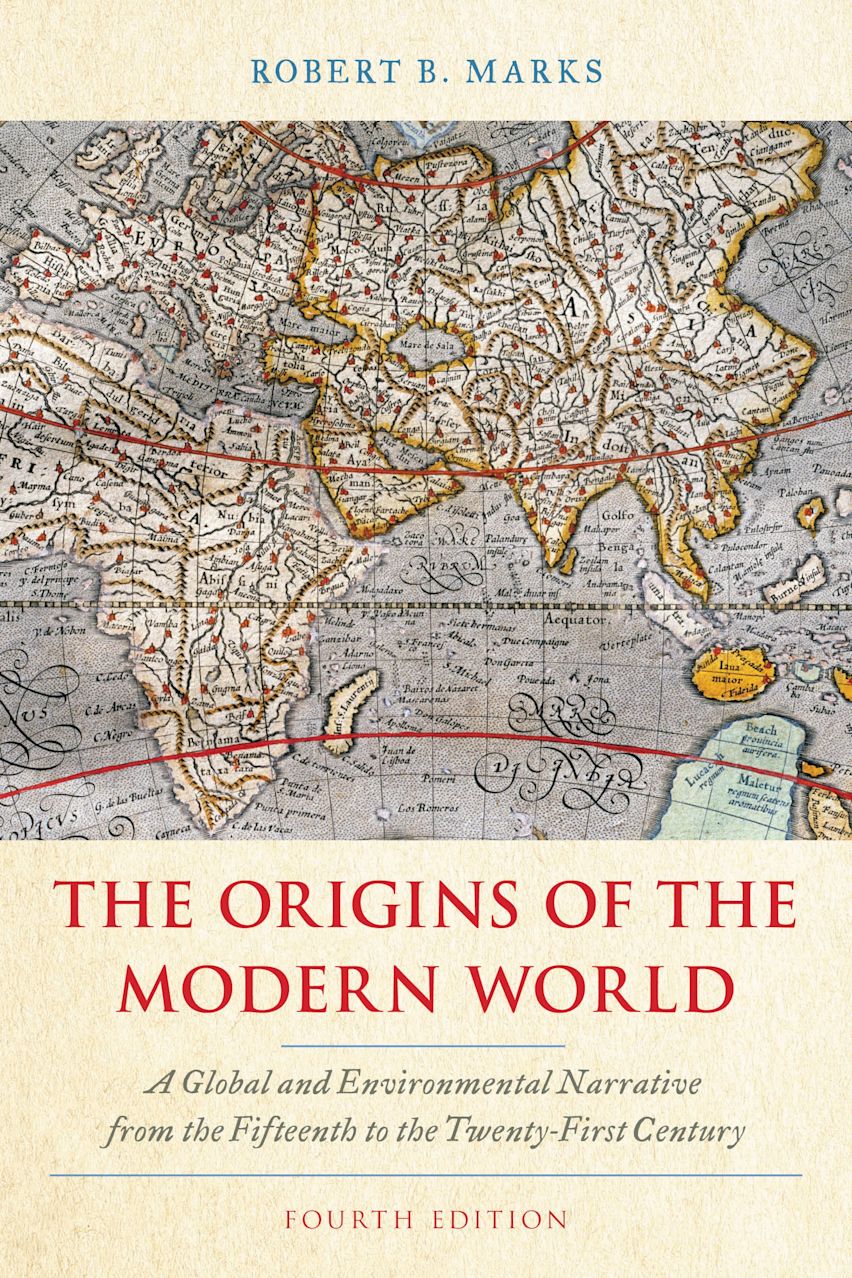
The Origins of the Modern World
A Global and Environmental Narrative from the Fifteenth to the Twenty-First Century
- Textbook
Please note that this product is not available for purchase from Bloomsbury websites.
Description
This clearly written and engrossing book presents a global narrative of the origins of the modern world from 1400 to the present. Unlike most studies, which assume that the “rise of the West” is the story of the coming of the modern world, this history, drawing upon new scholarship on Asia, Africa, and the New World and upon the maturing field of environmental history, constructs a story in which those parts of the world play major roles, including their impacts on the environment. Robert B. Marks defines the modern world as one marked by industry, the nation state, interstate warfare, a large and growing gap between the wealthiest and poorest parts of the world, increasing inequality within the wealthiest industrialized countries, and an escape from the environmental constraints of the “biological old regime.” He explains its origins by emphasizing contingencies (such as the conquest of the New World); the broad comparability of the most advanced regions in China, India, and Europe; the reasons why England was able to escape from common ecological constraints facing all of those regions by the end of the eighteenth century; a conjuncture of human and natural forces that solidified a gap between the industrialized and non-industrialized parts of the world; the mounting environmental crisis that defines the modern world; and the ways in which the forces of globalization stress the economic and political underpinnings of the modern world.
Now in a new edition that brings the saga of the modern world to the present in an environmental context, the book considers how and why the United States emerged as a world power in the twentieth century and became the sole superpower by the twenty-first century, and why the changed relationship of humans to the environmental likely will be the hallmark of the modern era-the Anthropocene. Once again arguing that the US rise to global hegemon was contingent, not inevitable, Marks also points to the resurgence of Asia and the vastly changed relationship of humans to the environment that may in the long run overshadow any political and economic milestones of the past hundred years.
Accessibility Information
Additional accessibility information
- EPUB 3.0
- Conforms with the requirements of EPUB Accessibility Spec v1.1
- WCAG level AA
- WCAG v2.2 compliant
- accessibility@bloomsbury.com
Hazards
The publication contains no hazards
Support for non-visual reading
- No accessibility features offered by the reading system, device or reading software are disabled or otherwise unusable with the product
- Has alternative text descriptions for images
Visual adjustments
Appearance of the text and page layout can be modified according to the capabilities of the reading system (font family and size, spaces, as well as color of background and text)
Navigation
- Page list to go to pages from the print source version
- Elements such as headings, tables, etc for structured navigation
- All or substantially all textual matter is arranged in a single logical reading order
- Content is enhanced with ARIA roles to optimize organization and facilitate navigation
- Purposes of all links are made clear
Rich content
Language tagging provided
Table of Contents
Preface and Acknowledgments
Introduction: The Rise of the West?
The Rise of the West
Eurocentrism
Stories and Historical Narratives
The Elements of an Environmentally Grounded Non-Eurocentric Narrative
Chapter One: The Material and Trading Worlds, circa 1400
The Biological Old Regime
The World and Its Trading System circa 1400
The Black Death: A Mid-Fourteenth-Century Conjuncture
Conclusion: The Biological Old Regime
Chapter Two: Starting with China
China
India and the Indian Ocean
Dar al-Islam, “The Abode of Islam”
Africa
Europe and the Gunpowder Epic
Conclusion
Chapter Three: Empires, States, and the New World, 1500–1775
Empire Builders and Conquerors
The Conquest of the Americas and the Spanish Empire
The New World Economy
Human Migration and the Early Modern World
The Global Crisis of the Seventeenth Century and the European State System
Chapter Four: The Industrial Revolution and Its Consequences, 1750–1850
Cotton Textiles
New Sources of Energy and Power
Coal, Iron, and Steam
Tea, Silver, Opium, Iron, and Steam
Conclusion: Into the Anthropocene
Chapter Five: The Gap
Opium and Global Capitalism
Industrialization Elsewhere
New Dynamics in the Industrial World
Nations and Nationalism
The Scrambles for Africa and China
El Niño Famines and the Making of the Third World
Social Darwinism and Self-Congratulatory Eurocentrism
Conclusion
Chapter Six: The Great Departure
Introduction to the Twentieth Century and Beyond
Part I: Nitrogen, Wars, and the First Deglobalization, 1900–1945
Part II: The Post–World War II and Cold War Worlds, 1945–91
Part III: Globalization and Its Opponents, 1991–Present
Part IV: The Great Departure: Into the Anthropocene
Conclusion
Conclusion: Changes, Continuities, and the Shape of the Future
The Story Summarized
Globalization
Into the Future
Notes
Index
About the Author
Product details
| Published | 05 Jul 2019 |
|---|---|
| Format | Ebook (Epub & Mobi) |
| Edition | 4th |
| Pages | 320 |
| ISBN | 9781538127049 |
| Imprint | Rowman & Littlefield |
| Series | World Social Change |
| Publisher | Bloomsbury Publishing |
Reviews

Related Titles