
- Home
- ACADEMIC
- Geography
- Human Geography
- Population Geography
Please note that this product is not available for purchase from Bloomsbury websites.
Buy from Bloomsbury eTextBooks
You are now leaving the Bloomsbury Publishing website. Your eBook purchase will be with our partner https://www.vitalsource.com.
Your credit card statement will show this purchase originating from VitalSource Technologies. They will also provide any technical assistance you might require.
You must sign in to add this item to your wishlist. Please sign in or create an account
Description
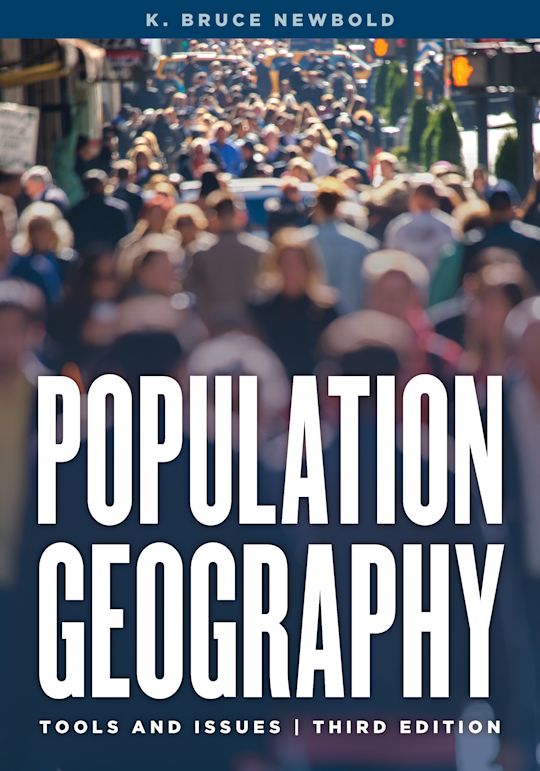
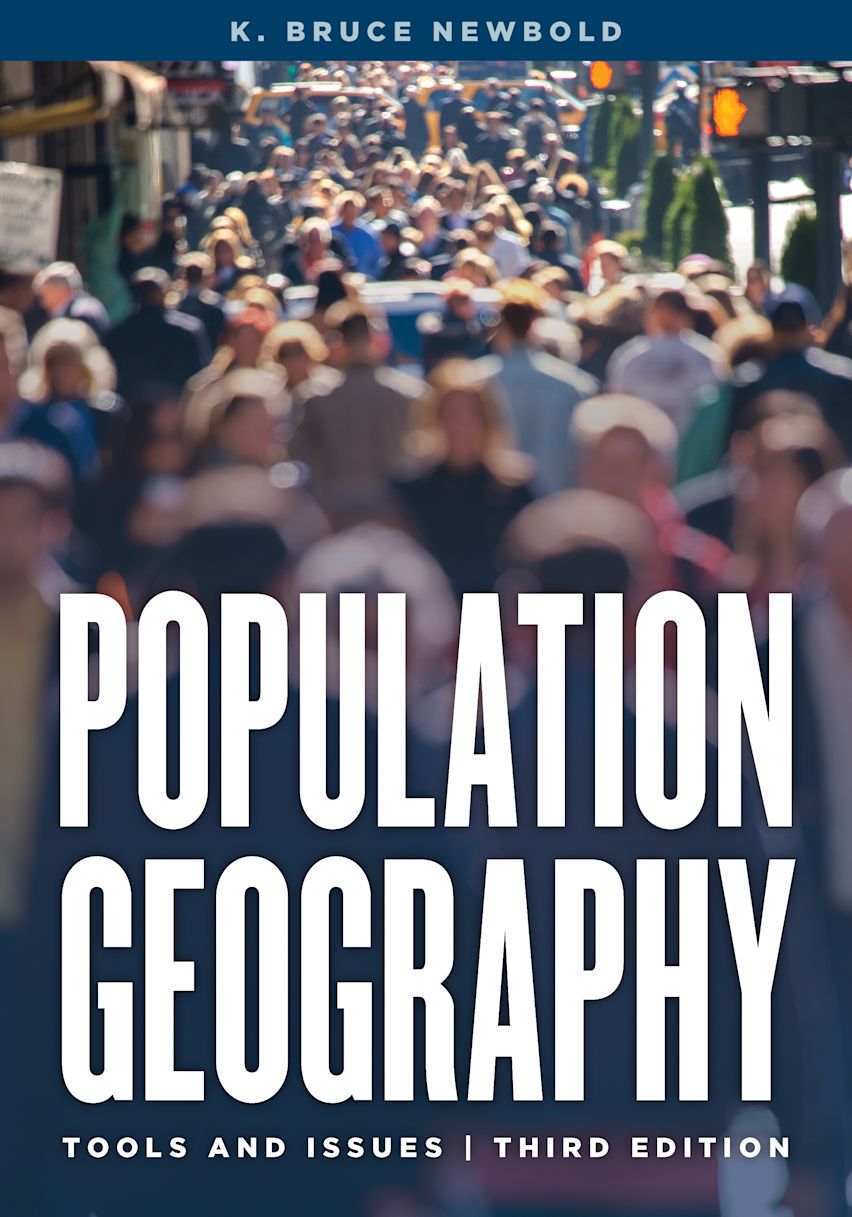
This compact and accessible text provides a comprehensive, issue-oriented introduction to population geography. First grounding students in the fundamentals, Bruce Newbold then explains the tools and techniques commonly used to describe and understand population concepts using real-world issues and events. Drawing on both U.S. and international cases, he explores such pressing concerns as HIV/AIDS, international migration, refugee movements, fertility, mortality, resource scarcity, and conflict. Every chapter includes both methods and focus sections to provide a more in-depth discussion of the ideas and concepts developed in the book. In addition, a wide array of maps, tables, and figures illustrate and enhance the cases. Newbold highlights the geographical perspective—with its ability to provide powerful insights and bridge disparate issues—by emphasizing the roles of space and place, location, regional differences, and diffusion. Arguing that an understanding of population is essential to prepare for the future, this cogent text will provide upper-division undergraduates with a thorough grasp of the field.
Table of Contents
Chapter 1: World Population
Chapter 2: Population Data
Chapter 3: Population Distribution and Composition
Chapter 4: Fertility
Chapter 5: Mortality
Chapter 6: Internal Migration
Chapter 7: International Migration Flows: Immigration and Transnational Migrants
Chapter 8: Refugees and Internally Displaced Persons
Chapter 9: Cities
Chapter 10: Population Policies
Chapter 11: Population Growth: Linking to Economic Development, Resource Scarcity, and Food Security
Conclusion: Doing Population Geography
Product details
| Published | 15 Feb 2017 |
|---|---|
| Format | Ebook (Epub & Mobi) |
| Edition | 3rd |
| Extent | 366 |
| ISBN | 9781442265325 |
| Imprint | Rowman & Littlefield Publishers |
| Publisher | Bloomsbury Publishing |
About the contributors
Reviews
-
"An excellent primer on population geography: ideal for the classroom and accessible to even a novice lay audience. Virtually all challenges facing our world today have a demographic component, and Newbold’s book provides the conceptual, analytical, and topical foundation necessary for engaging with these issues. For instructors seeking a text that integrates theory and current demographic issues with research tools and methods, this book has it all.”
Rachel Franklin, Brown University
-
Regardless of their research interests, most social scientists, geographers, and planners at some time in their careers must include population as a variable that must be addressed. For those with little or no formal training in demography. Newbold’s book, although a textbook, is an excellent handbook to consult.
Journal of Urban Affairs
-
“Newbold skillfully presents important population research themes at different spatial scales in a way that is both clear and balanced. The Focus sections and the Methods, Measures, and Tools sections encourage students to engage with the material by reflecting on real-world issues and case studies in an in-depth manner. Full of expanded international examples and new figures, this updated edition will be an invaluable text for undergraduate students.”
Carlos Teixeira, University of British Columbia
-
This fine book stands out amid the many texts available on the population question. Newbold takes us on a tour through the familiar landscape of population geography and, with great clarity, makes the subject more diverse, complex, and interesting, and thus more important.
Emily Skop, University of Colorado, Colorado Springs
-
Globalization is changing the way in which populations are studied. Bruce Newbold's timely book teaches how geographic principles and techniques are used to measure and understand the changing nature of populations around the world. The chapters are cutting-edge, and the in-depth focus and methods and measures at the end of each chapter make this a very interesting and all-inclusive textbook for graduate and undergraduate students. It's also a great resource for cross-disciplinary researchers and professionals who want to understand and apply population geography in their work today.
Sue C. Grady, Michigan State University
-
Brilliantly done. Bruce Newbold combines a comprehensive knowledge of population geography with insights gained from his own work to write a book that presents important population issues at multiple spatial scales in a way that encourages students to seriously engage the material. Just as important as the concepts are the series of exercises designed to teach students some of the methods of population geography and how they can be used to tackle vital issues. This text will save me countless hours of work while providing my students with one of the best introductions to the field. I can’t wait to start using it.
Matthew Shumway, Brigham Young University