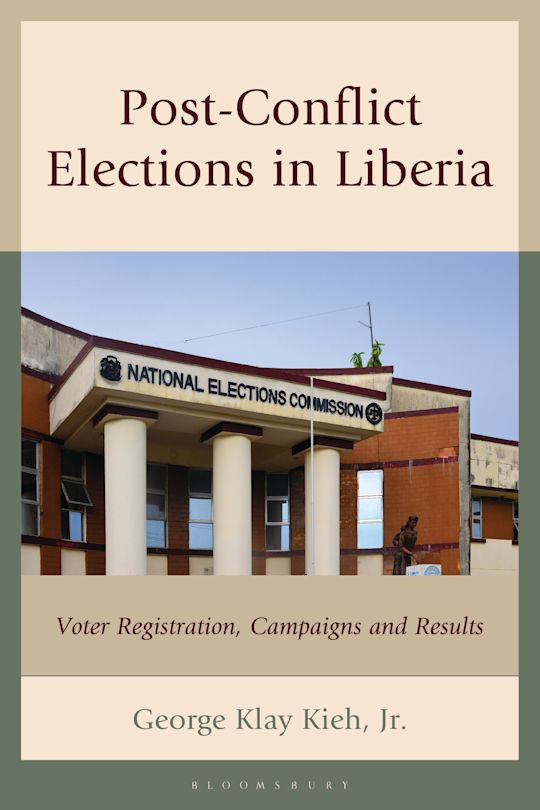

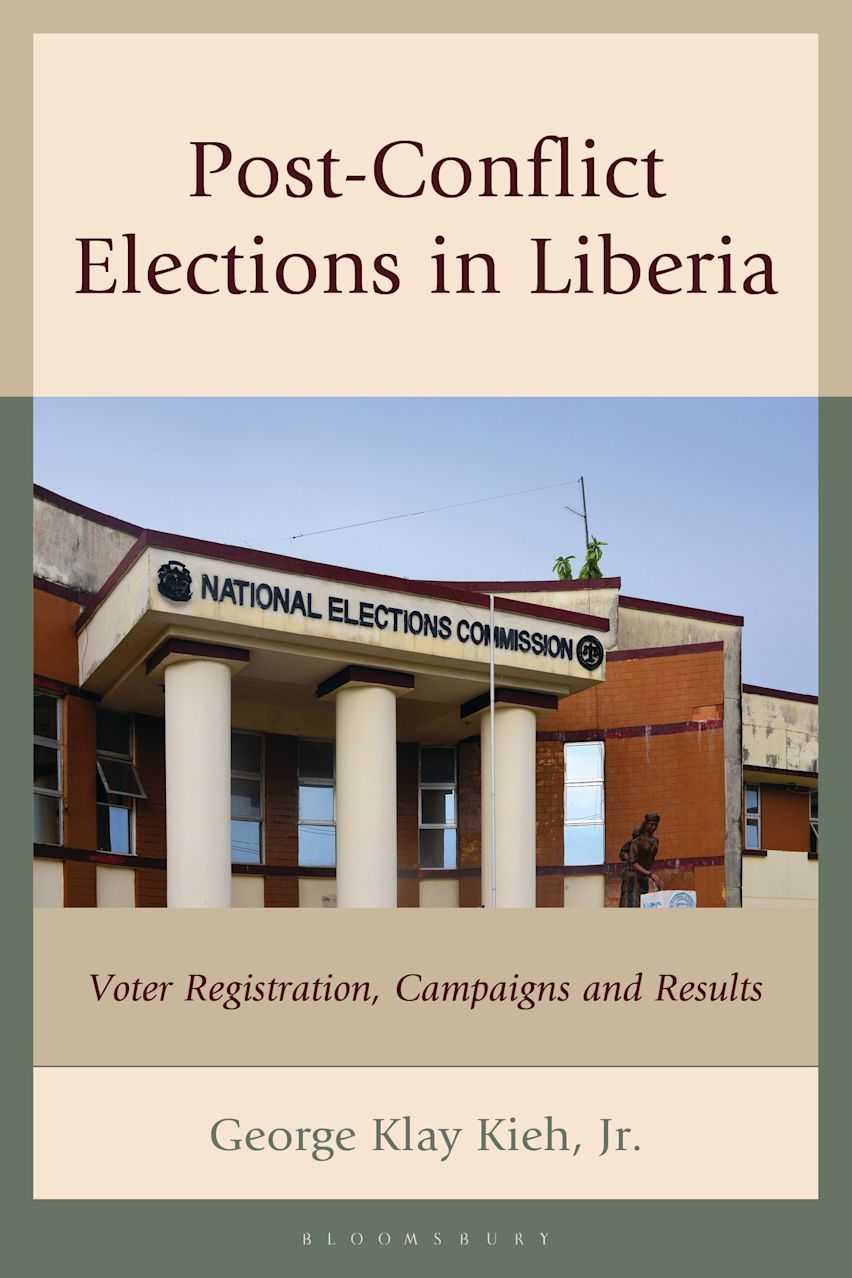
Post-Conflict Elections in Liberia
Voter Registration, Campaigns and Results
Buying pre-order items
Ebooks and Audiobook
You will receive an email with a download link for the ebook or audiobook on the publication date.
Payment
You will not be charged for pre-ordered books until they are available to be shipped. Pre-ordered ebooks will not be charged for until they are available for download.
Amending or cancelling your order
For orders that have not been shipped you can usually make changes to pre-orders up to 72 hours before the publishing date.
Payment for this pre-order will be taken when the item becomes available
- Delivery and returns info
-
Free UK delivery on orders £30 or over
Description
Unpacks Liberia's five post-conflict elections, interrogates the forces at play throughout the electoral processes, and traces changes in elections in Liberia overtime.
Covering the 1997, 2005, 2011, 2017, and 2023 elections in Liberia, this book untangles the electoral environment in which these elections took place, highlighting the economic, political, and security challenges that followed both recent civil wars and beyond. Through this exploration, the author discusses the selection of the elections management board, voter registration and education, the vetting of candidates, campaigning, voting, and the results of the electoral process. He also examines the external forces involved, such as the Economic Community of West African States, which oversaw the 1997 and 2005 elections, the African Union, the United Nations, and the United States.
Kieh argues that even after the two civil wars, the political regimes in power did not start the multidimensional process of structural transformation required in Liberia to bring democracy. Instead, the regimes focused on holding regular elections regardless of the ability for the elections to be fair with oversight that is impartial and able to enforce the election results. Examining these continued concerns, the author urges for further study on the relationship between post-conflict elections and peace-building in Liberia, positing solutions for working democracies.
Table of Contents
Preface
Acknowledgments
Introduction: From Civil Wars to the Ballot Box in Liberia
Chapter 1: Explaining Post-Conflict Elections: Nature, Dimensions and Theory
Chapter 2: 1997 Election: Rewarding Warlordism
Chapter 3: 2005 Elections: Hoping for a Better Future
Chapter 4: 2011 Elections: The Search for a Second Term, Chaos and the Power of Incumbency
Chapter 5: 2017 Elections: Strange Political Bedfellows and Legal Intrigues
Chapter 6: 2023 Elections: Hope Betrayed and the Search for “Rescue”
Conclusion: Weaving the Threads of Post-Conflict Elections in Liberia
Bibliography
Index
About the Author
Product details

| Published | 12 Nov 2026 |
|---|---|
| Format | Hardback |
| Edition | 1st |
| Pages | 224 |
| ISBN | 9781498581950 |
| Imprint | Bloomsbury Academic |
| Illustrations | 16 tables |
| Dimensions | 229 x 152 mm |
| Publisher | Bloomsbury Publishing |
Reviews
Related Titles