Precolonial Communities in Postcolonial Africa
The Resilience of Indigenous Groups in Contemporary Politics
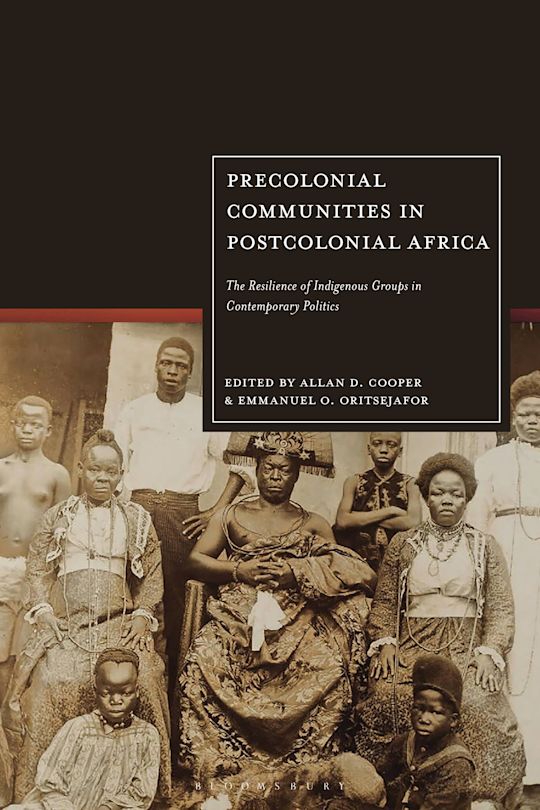

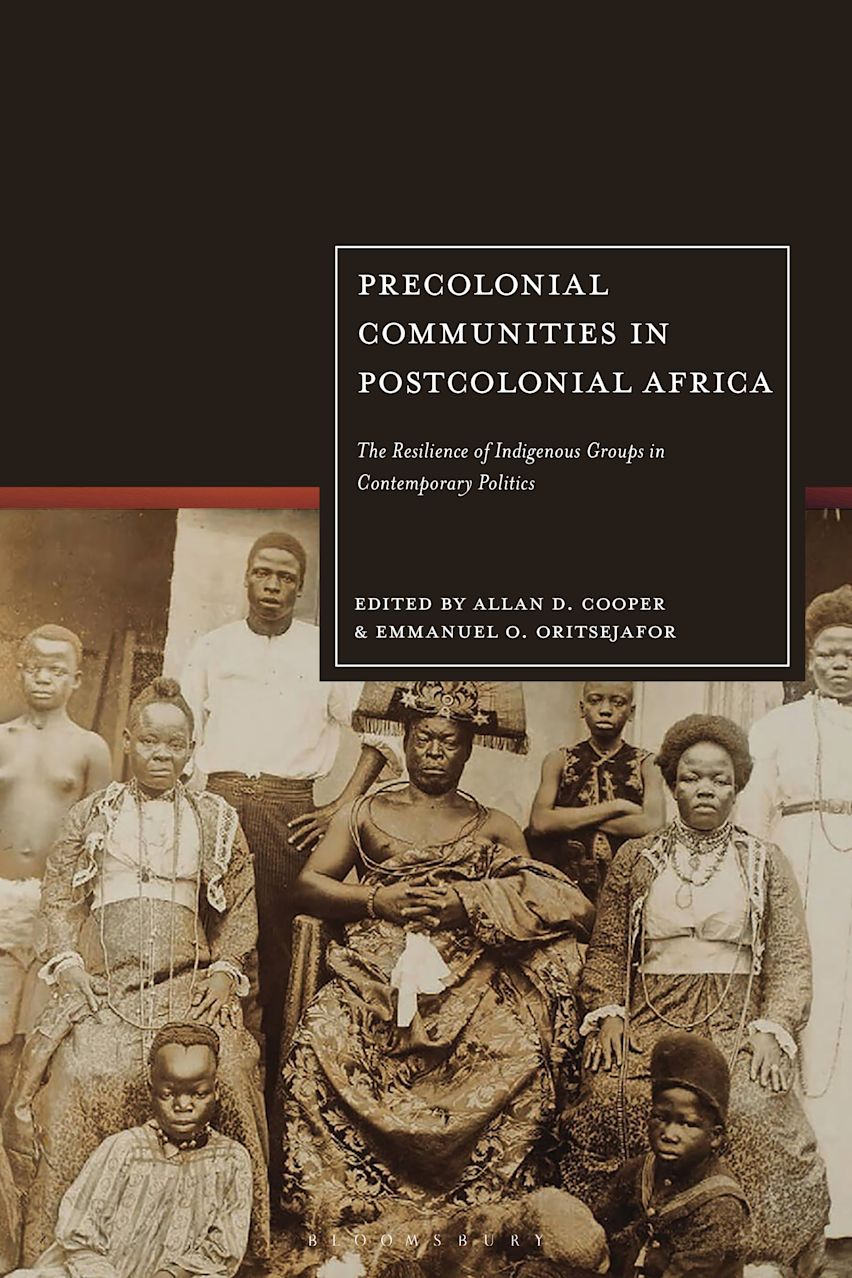
Precolonial Communities in Postcolonial Africa
The Resilience of Indigenous Groups in Contemporary Politics
Buying pre-order items
Ebooks and Audiobook
You will receive an email with a download link for the ebook or audiobook on the publication date.
Payment
You will not be charged for pre-ordered books until they are available to be shipped. Pre-ordered ebooks will not be charged for until they are available for download.
Amending or cancelling your order
For orders that have not been shipped you can usually make changes to pre-orders up to 72 hours before the publishing date.
Payment for this pre-order will be taken when the item becomes available
- Delivery and returns info
-
Free UK delivery on orders £30 or over
Description
This collection takes on one of the most important and vexing issues in African development - the role played by African states in under-development on the continent - and shows how empowering resilient precolonial communities offers under-explored routes forward.
Rather than comparing African states to states elsewhere, this book takes a unique bottom-up approach and compares how major ethnic communities within Africa have developed over time under various state systems. It begins with an investigation into major precolonial societies and the way in which they were affected by the slave trade and colonialism. It then offers individual case studies from the length and breadth of the continent, and in so doing, provides a near-comprehensive account of historical African community and state formation, including coverage of under-researched peoples such as the central African Fang, as well as of the Kongo, Benin, Akan, Kru, Oromo, and Ovambo communities. Each case study analyzes how postcolonial African states have functioned as self-interested political entities often times at the expense of the economic and political development of its Indigenous communities, who are forced into a pluralist state systems that set them in economic and political competition with each other. True improvement in the lives of everyday citizens proves to be possible only by empowering traditional knowledges and practices - and with that, Indigenous communities' capabilities for economic and political self-governance.
Written by a significant contingent of African scholars, this collection contributes in its very practice to the decolonial policies it argues for, and is a must-read for researchers, upper-level students, and practitioners and policymakers interested in African development, African history, and post- and decolonial approaches to development.
Table of Contents
Allan D. Cooper and Emmanuel O. Oritsejafor (North Carolina Central University, USA)
2. Kingdom of Kongo: Democratic Republic of Congo, Republic of Congo, Angola
Musifiky Mwanasali (African Union)
3. Kingdom of Fang: Equatorial Guinea, Gabon, Cameroon
Yolanda Aixelà-Cabré (University of Barcelona, Spain)
4. Kingdom of Benin: Nigeria
Emmanuel O. Oritsejafor
5. The Akan People: Ghana, Ivory Coast
Kwame Osei Kwarteng (University of Cape Coast, Ghana)
6. The Kru People: Liberia, Sierra Leone
George Klay Kieh (Texas Southern University, USA)
7. The Wolof Empire: Senegal, Gambia, Mauritania
Alexander Keese (University of Geneva, Switzerland)
8. The Alawi Dynasty: Morocco, Western Sahara
Nourdin Bejjit (Universite Mohamed V, Morocco) and Karim Bejjit (Abdelmalek Essaadi University, Morocco)
9. The Oromo People: Ethiopia, Kenya, Somalia
Asafa Jalata (University of Tennessee, USA)
10. The Kikuyu People: Kenya
Shadrack Wanjala Nasong'o (Rhodes College, USA)
11. The Shona People: Zimbabwe, Mozambique, South Africa
James Muzondidya (University of Zimbabwe, Zimbabwe)
12. The Zulu Kingdom and the Xhosa People: South Africa, Eswatini
Morgan Ndlovu (University of South Africa, South Africa)
13. The Ovambo People: Namibia, Angola
Allan D. Cooper
Product details

| Published | 06 Aug 2026 |
|---|---|
| Format | Hardback |
| Edition | 1st |
| Pages | 216 |
| ISBN | 9781350592100 |
| Imprint | Bloomsbury Academic |
| Dimensions | 234 x 156 mm |
| Publisher | Bloomsbury Publishing |
Reviews

ONLINE RESOURCES
Bloomsbury Collections
This book is available on Bloomsbury Collections where your library has access.
Related Titles