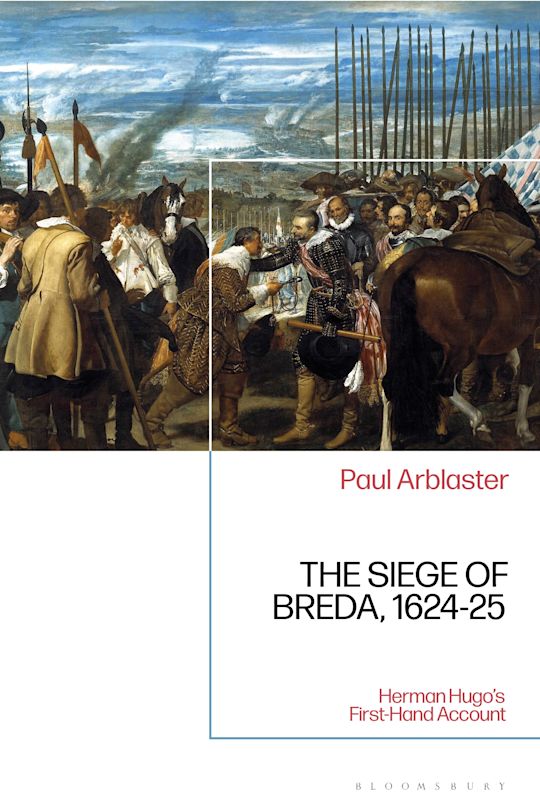


The Siege of Breda, 1624-25
Herman Hugo’s First-Hand Account
Buying pre-order items
Ebooks and Audiobook
You will receive an email with a download link for the ebook or audiobook on the publication date.
Payment
You will not be charged for pre-ordered books until they are available to be shipped. Pre-ordered ebooks will not be charged for until they are available for download.
Amending or cancelling your order
For orders that have not been shipped you can usually make changes to pre-orders up to 72 hours before the publishing date.
Payment for this pre-order will be taken when the item becomes available
- Delivery and returns info
-
Free UK delivery on orders £30 or over
Description
This book presents Herman Hugo's The Siege of Breda (1626) in a modern-spelling edition of Henry Gage's 1627 English translation, introduced and contextualised by Paul Arblaster. Hugo's text is a classic of Latin Baroque historical writing that comprehensively recounts a nine-month military campaign in the Low Countries (1624-25) which was a showcase of early 17th-century siege warfare and attracted the attention and involvement of almost every country in Europe. His translator was an Englishman who served in the siege as a company captain.
Arblaster shines a light on Hugo's first-hand account of the siege, with its considerations of every aspect of the military operations and their human consequences. Hugo took part in the campaign himself as chaplain to the general who conducted the siege, Ambrogio Spinola, and so had privileged access to the decision-making process, as well as close familiarity with the various events and incidents that he recounts. Hugo also devotes attention to the moral and material state of the soldiery and of the besieged; describes individual actions, lapses, feats of heroism, duels, ambushes and stratagems; and considers the wider propaganda war that surrounded the siege. As a result, his book offers a contemporary commentary on the role of honour, reputation and image in 17th-century warfare, as well as vital insights into the perspective of one of the first and foremost celebrity generals of the time.
Table of Contents
1. The Siege of Breda: Context, course and consequences
2. Contemporary Reports and Depictions of the Siege
3. Herman Hugo: A confessor and his history
4. Hugo's Translators and their Careers
5. Afterlife in Art and Literature
Part 2 - The Siege of Breda
6. Description of Breda and its surroundings
7. The decision to besiege the town
8. Breda encircled and invested
9. Relief forces and skirmishes
10. Provisions and logistics
11. Hardships of the siege
12. Fresh relief forces
13. Correspondence
14. The final push
15. Surrender
16. Triumph
Explanatory Notes
Bibliography
Index
Product details

| Published | 20 Aug 2026 |
|---|---|
| Format | Hardback |
| Edition | 1st |
| Pages | 256 |
| ISBN | 9781350553866 |
| Imprint | Bloomsbury Academic |
| Illustrations | 10 bw illus |
| Dimensions | 234 x 156 mm |
| Publisher | Bloomsbury Publishing |
Reviews
Related Titles