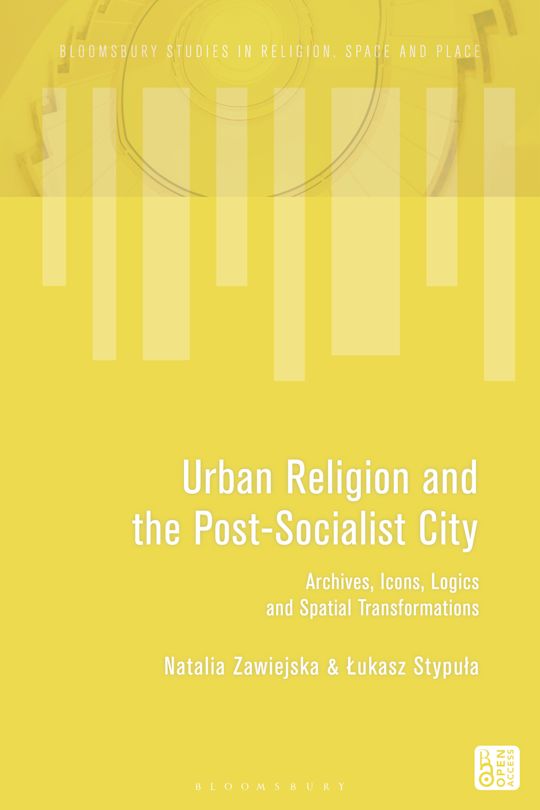
Urban Religion and the Post-Socialist City
Archives, Icons, Logics and Spatial Transformations
- Open Access

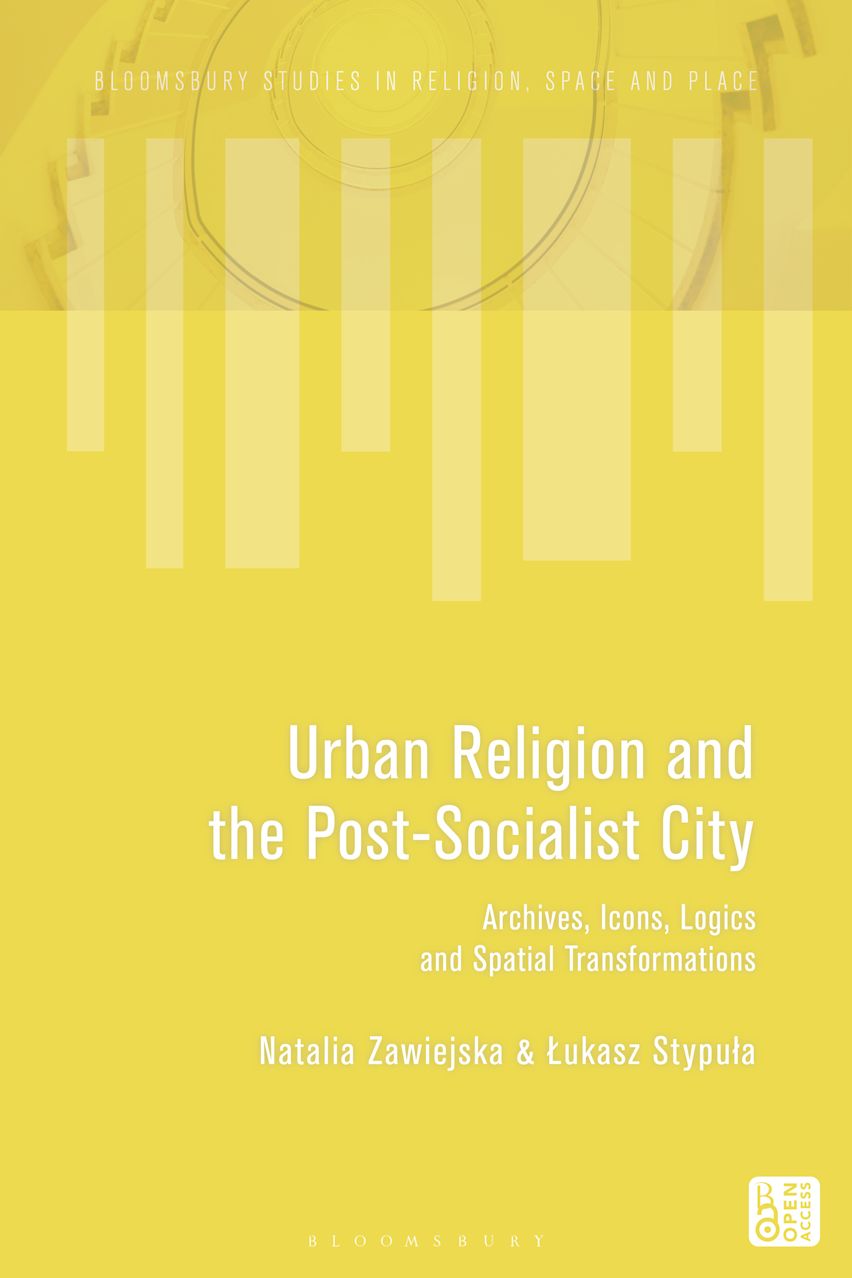
Urban Religion and the Post-Socialist City
Archives, Icons, Logics and Spatial Transformations
- Open Access
Buying pre-order items
Ebooks and Audiobook
You will receive an email with a download link for the ebook or audiobook on the publication date.
Payment
You will not be charged for pre-ordered books until they are available to be shipped. Pre-ordered ebooks will not be charged for until they are available for download.
Amending or cancelling your order
For orders that have not been shipped you can usually make changes to pre-orders up to 72 hours before the publishing date.
Payment for this pre-order will be taken when the item becomes available
- Delivery and returns info
-
Free UK delivery on orders £30 or over
Description
This open access book rethinks urban religion in the context of the social, economic and political transformations in post-socialist Central and Eastern Europe.
Grounded in extensive ethnographic studies conducted in three major cities in Poland – Kraków, Gdansk and Lublin – this book engages, critiques and expands the framework of urban religion. It disentangles the concept of urban religion from specific religious traditions, instead presenting it as a modality of urban life that is embedded in a vast social field. Through its focus on Poland, it furthermore argues and shows that the Western-centric theories on religion in urban space that dominate the field do not fully capture the religious infrastructures, practices and dynamics that characterize post-socialist regions in Central and Eastern Europe.
Engaging digital humanities and using innovative experimental methodologies – including mapping, archiving, assembling, aggregating and scaling – to analyse an extensive data set of more than 22,000 records collected in the urban public sphere, the book introduces new descriptive and analytical categories and tools for understanding the place of religion in the social lives of cities in this region and beyond. These categories for capturing and making sense of the urban-religious logics of the post-socialist city include – among others – protest, taboo, commemoration, absence, 'non-religion', and a mistake–unruliness composite. By introducing a range of new concepts and methodologies, and by centring post-socialist urban formations, this book provides an important critical intervention in the study of urban religion.
Table of Contents
Urban Religion Archive
Introduction
Part I: Theorizing Urban Religion
Urban Public Space and Social Imaginary
Urban Religion: Methodologies of Senses, Space, Materiality and Infrastructure
Archives, Maps, Religious Icons and the Challenge of Detection
Landscapes: A Temporary Large-scale Logic
Reframing Urban Religion: Logics
Part II: Bird's Eye View: Infrastructures and Shifting Mediations
Urban Religion and Urban Infrastructures
The Street: Innovative and Unobvious Mediations
Part III: Itineraries and Logics: Religion as the Urban Way of Life
1. Post-Socialist Urban Transformation: Urban Religion, Spatial and Material Patterns and the Public Sphere
2. Urban Governance and Taboo Logic
3. Reframing Judaism: Non-religion, Absence and Commemoration
4. Modes of Engagement: Activism, Rebellion, Protests and Creativity
5. Nationhood and Statehood in the City: Commemoration as an Infrastructural Logic of Urban Religion
6. Mistakes, Uncertainty, Unruliness and Urban Religion's Blurred Limits
Conclusion
References
Notes
Index
Product details

| Published | 10 Dec 2026 |
|---|---|
| Format | Hardback |
| Edition | 1st |
| Pages | 272 |
| ISBN | 9781350576353 |
| Imprint | Bloomsbury Academic |
| Illustrations | 40 bw illus |
| Dimensions | 234 x 156 mm |
| Series | Bloomsbury Studies in Religion, Space and Place |
| Publisher | Bloomsbury Publishing |
Related Titles