Beyond Same-Sex Marriage
Perspectives on Marital Possibilities
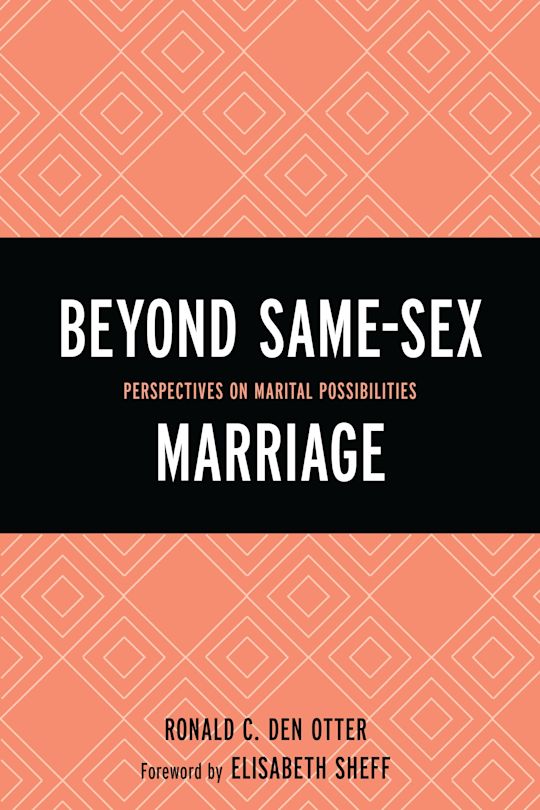


Beyond Same-Sex Marriage
Perspectives on Marital Possibilities
Description
Although the debate over same-sex marriage in the United States has ended, no one seems to know what lies on the horizon. The conversation about what marriage could be like in the future is no longer confined to academics. In his dissent in Obergefell, Chief Justice Roberts linked the constitutionally-mandated legal recognition of same-sex marriage to the possibility that states may also have to recognize multi-person intimate relationships as well to avoid discriminating against plural marriage enthusiasts. The popularity of television shows like TLC’s Sister Wives and HBO’s Big Love suggests that Americans no longer can be dismissive of the possibility that in the foreseeable future, marriage could, and perhaps should, look very different than it does today.
Rather than settling the question of whether states ought to abolish marriage, make it more inclusive, contractual, or call it something else, this book exposes readers to some of the normative, legal, and empirical questions that Americans must address before they can deliberate thoughtfully about whether to keep the marital status quo where monogamy remains privileged. Unlike much of the debate over same-sex marriage, they exchange reasons with one another as they discuss marital reform. This book is for ordinary Americans, their elected representatives, and judges, to help them ultimately decide whether they want to continue to define marriage so narrowly, make it more inclusive to avoid discrimination, or have the state leave the marriage business. This edited, interdisciplinary volume contains eight original contributions, all of which illuminate important but often neglected areas of the topic.
Table of Contents
Introduction Ronald C. Den Otter
Chapter One: Obergefell and the Liberal Case Against Civil Marriage, Sonu Bedi
Chapter Two: Progressive Polygamy in the Western United States, Janet Bennion
Chapter Three: Plural Marriage, Exemptions, and the Redundancy of the Free Exercise Clause, Ronald C. Den Otter
Chapter Four: Robotic Marriage and the Law, Mark Goldfeder and Yosef Razin
Chapter Five: A Friendship Model of Sex, Polyamory, and Plural Marriage, Diane Klein
Chapter Six: Public Reason, Liberal Neutrality, and Marriage, Andrew Lister
Chapter Seven: Polygamy in Islam: Origins and Challenges, Ameneh Maghzi and Mark Gruchy
Chapter Eight: The Need for a Sociological Perspective on Polyamory, Kristin McCarty
Chapter Nine: Scrutinizing Polygamy: Utah’s Brown v. Buhman and British Columbia’s Reference Re: Section 293,Maura Strassberg
Chapter Ten: The Paradox of Big Love in the Liberal State: Treating Adults like Children and Children like Adults, Olivia Newman
About the Contributors
Product details
| Published | Sep 06 2016 |
|---|---|
| Format | Ebook (PDF) |
| Edition | 1st |
| Pages | 258 |
| ISBN | 9798216235316 |
| Imprint | Lexington Books |
| Publisher | Bloomsbury Publishing |
Reviews
Related Titles