Building a Successful Fiscal Federation
Constitutional Lessons for the EU
Stefan Griller (Anthology Editor) , Florian Huber (Anthology Editor) , Sonja Puntscher Riekmann (Anthology Editor)
- Open Access
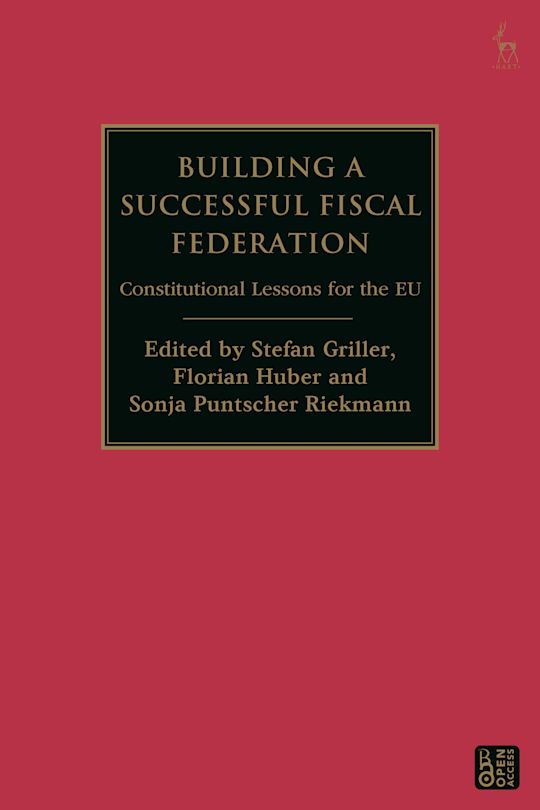

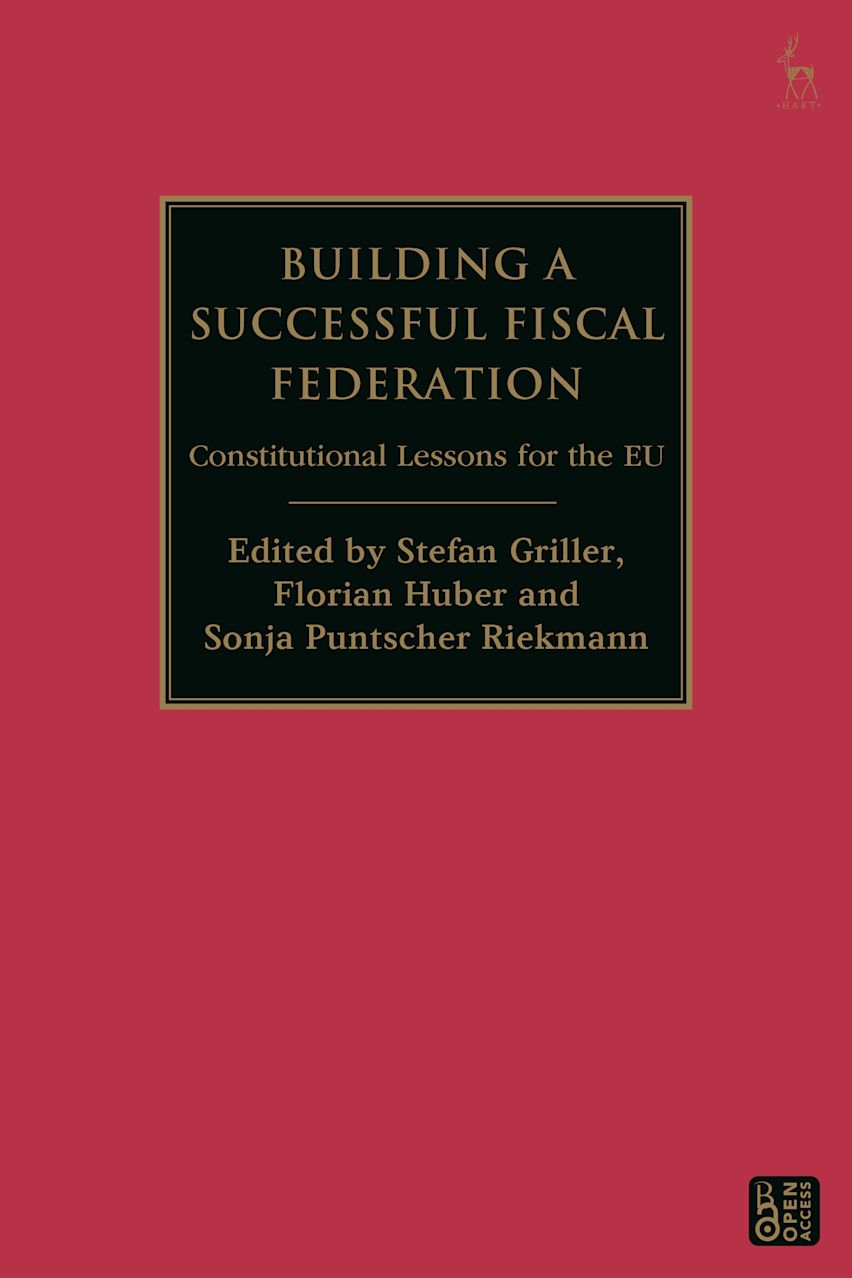
Building a Successful Fiscal Federation
Constitutional Lessons for the EU
Stefan Griller (Anthology Editor) , Florian Huber (Anthology Editor) , Sonja Puntscher Riekmann (Anthology Editor)
- Open Access
Payment for this pre-order will be taken when the item becomes available
This product is usually dispatched within 1 week following the publication date
- Delivery and returns info
-
Free US delivery on orders $35 or over
Description
This open access book analyses the fiscal constitutions of developed, democratic Western federations that can offer a model for a future EU fiscal federalism, and draws lessons for the EU.
The 2009-08 sovereign debt crisis revealed the urgency to overhaul the fiscal architecture of the EU to protect the Eurozone. In the book, national experts analyse the fiscal architecture of Australia, Austria, Belgium, Canada, Germany, Switzerland and the USA as key examples of federated entities that exercise autonomy in fiscal matters. Throughout their histories, these federations have faced political clashes between centre and periphery or among sub-federal entities which are reminiscent of current conflicts in the EU. Moreover, in times of crisis such as wars, the COVID-19 pandemic, or asymmetric economic shocks, their fiscal systems have been put under stress in comparable ways to the EU.
An interdisciplinary team of lawyers, political scientists, and economists uses the analysis of the sample federal states to provide concrete reform suggestions applicable to the EU. Thus, the book offers food for thought for researchers and advanced students, as well as for practitioners in the areas of administration and politics, to make the EU fiscal architecture more resilient in the face of future crises.
The ebook editions of this book are available open access under a CC BY-NC-ND 4.0 licence on bloomsburycollections.com.
Table of Contents
Part I: Fiscal Federalism in a Wider World
1. Australia, Nicholas Aroney (The University of Queensland, Australia) and Alan Fenna (Curtin University, Australia)
2. Canada, André Lecours (University of Ottawa, Canada), Daniel Béland (McGill University, Canada), Vanessa MacDonnell (University of Ottawa, Canada), Peter Oliver (University of Ottawa, Canada), and Trevor Tombe (University of Calgary, Canada)
3. Switzerland, Sean Müller (University of Lausanne, Switzerland)
4. United States of America, Jonathan Rodden (Stanford University, USA)
Part II: Fiscal Federalism in EU Member States
5. Austria, Franz Fallend (University of Salzburg, Austria), Rainer Palmstorfer (University of Linz, Austria), and Hannes Winner (University of Salzburg, Austria)
6. Belgium, Willem Sas (Hasselt University, Belgium), Damien Piron (University of Liège, Belgium), André Decoster (Catholic University Leuven, Belgium), and Patricia Popelier (University of Antwerp, Belgium)
7. Germany, Natalie Behnke (Technical University Darmstadt, Germany), Christian Bender (University of Leipzig (Germany), Fabio Lennart Botta (University of Leipzig, Germany), Simon Kempny (University of Bielefeld, Germany), Mario Hesse (University of Leipzig, Germany), Thomas Lenk (University of Leipzig, Germany) and Sebastian Plesdonat (University of Bielefeld, Germany)
Part III: Fiscal Federalism in the EU?
8. An Analysis of the Existing System, Corinna Dornacher (University of Salzburg, Austria), Stefan Griller (Vienna University of Economics and Business, Austria), Florian Huber (University of Salzburg, Austria), Sonja Puntscher Riekmann (Austrian Academy of Sciences, Austria), and Ivana Skazlic (Council of European Municipalities and Regions, Belgium)
9. Lessons to be Learnt from Our Model Fiscal Federations, Corinna Dornacher (University of Salzburg, Austria), Stefan Griller (Vienna University of Economics and Business, Austria), Florian Huber (University of Salzburg, Austria), Sonja Puntscher Riekmann (Austrian Academy of Sciences, Austria), and Ivana Skazlic (Council of European Municipalities and Regions, Belgium)
10. Reform Options - Political Choices Based on Principled Reflection, Corinna Dornacher (University of Salzburg, Austria), Stefan Griller (Vienna University of Economics and Business, Austria), Florian Huber (University of Salzburg, Austria), Sonja Puntscher Riekmann (Austrian Academy of Sciences, Austria), and Ivana Skazlic (Council of European Municipalities and Regions, Belgium)
Product details
| Published | Apr 02 2026 |
|---|---|
| Format | Hardback |
| Edition | 1st |
| Pages | 544 |
| ISBN | 9781509988655 |
| Imprint | Hart Publishing |
| Dimensions | 9 x 6 inches |
| Publisher | Bloomsbury Publishing |


OPEN ACCESS
Bloomsbury Open Access
Read and download this book free of charge from Bloomsbury Collections.
Related Titles