Cosmopolitan Crete
A History of Cultural, Ethnic, Linguistic, and Religious Mixing
- Open Access
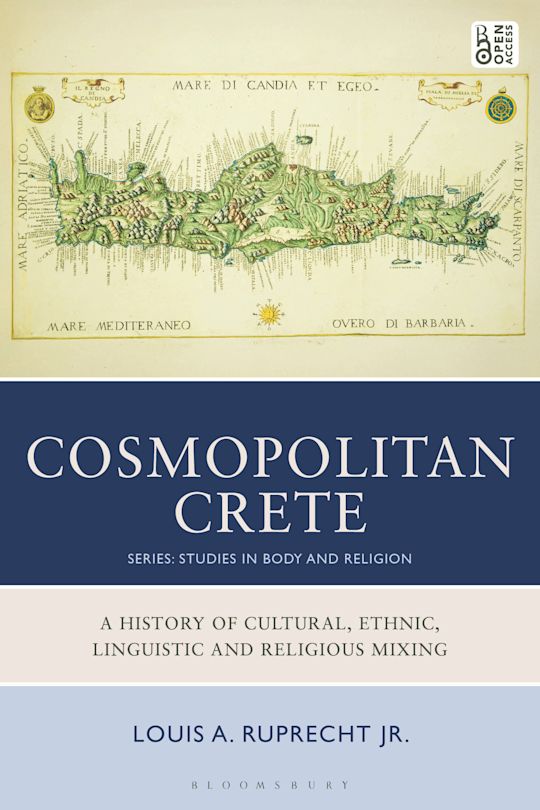

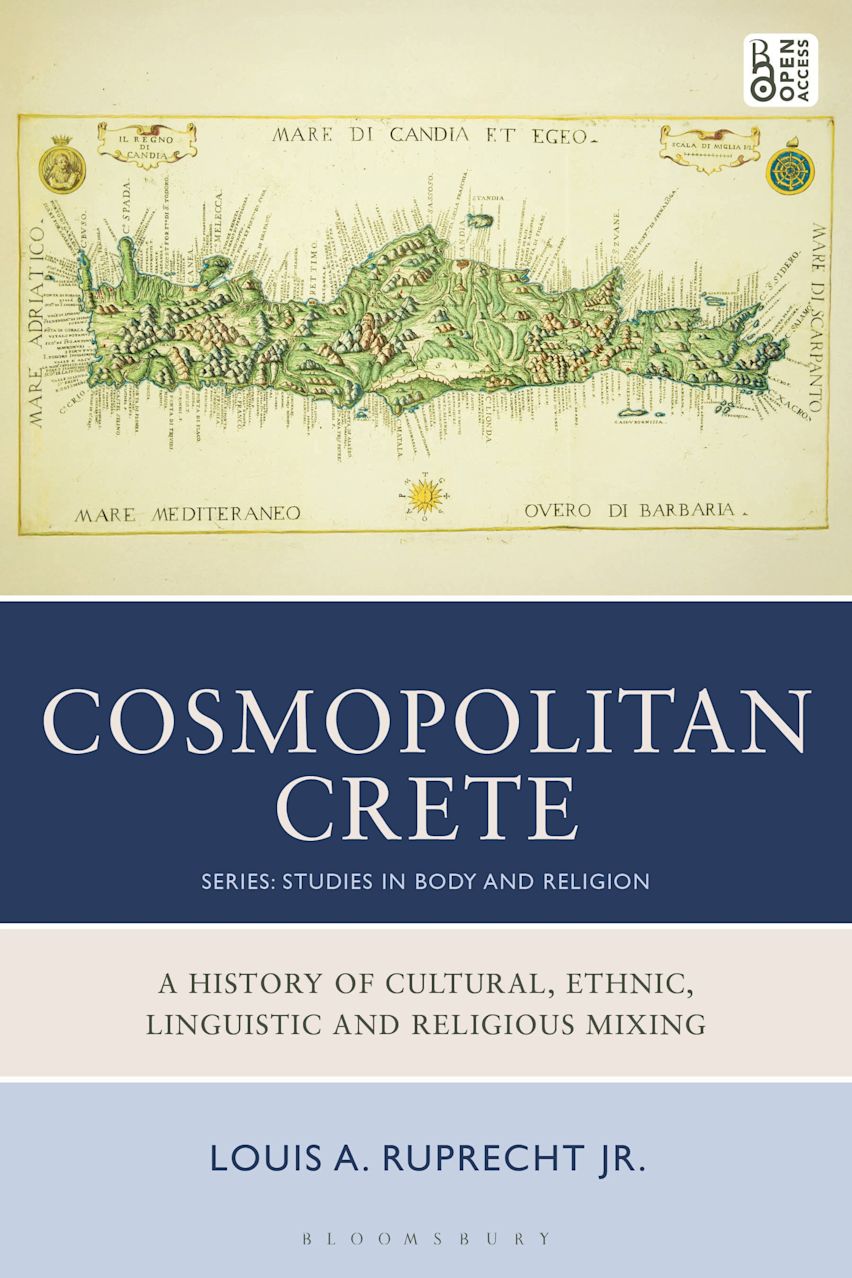
Cosmopolitan Crete
A History of Cultural, Ethnic, Linguistic, and Religious Mixing
- Open Access
Payment for this pre-order will be taken when the item becomes available
- Delivery and returns info
-
Free US delivery on orders $35 or over
Description
This open access book studies the history of the island of Crete as a site of ethnic and religious mixing and reveals how this relates to modern day interest in pluralistic community formation.
Louis A Ruprecht Jr. explores the mixture of culture, traditions, languages, and religion in the Greek island of Crete to explore the idea that mixing creates both marvels and monsters. The book considers how all of the bodies living and mixing on Crete were caught up in ritual, ceremony, and contexts which can be identified as religious. Ruprecht explores archeology, literature, myths, and biblical stories, revealing how the history of mixing cultures and ideas in Crete, focusing mostly on Greek mythology and the early spread of Christianity. In essence, Ruprecht uses Crete's history as an example to show how we can live in mixed societies rather than amidst constant culture wars.
The ebook editions of this book are available open access under a CC BY-NC-ND 4.0 license on bloomsburycollections.com. Open access was funded by Emory University and the Andrew W. Mellon Foundation.
Table of Contents
Acknowledgments
Introduction: Cretan Myths: Women, Marvels, Pirates, and Monsters
PART ONE: ANCIENT HISTORY AND THE EMERGENCE OF THE COSMOPOLITAN IDEAL
1: Crete in the Stone Age: Oceans Connect: The Sea and Stone Age Seafarers
2. Crete in the Bronze Age: Sir Arthur Evans and the Marvels of Minoan Mixing
3. Crete in the Classical Age: The Classical Commons: Mixed Laws, Mixed Constitutions, Mixed Citizens
PART TWO: CRETE AS A ROMAN MONSTER
4. Crete in the Roman Age: The Politics of Piracy: The Roman War on Terror
5: Christianity on Crete: Titus on Christian Virtue: Cultural Mixing and Cretan Vice
PART THREE: COSMOPOLITAN MARVELS BETWEEN THE LATER ROMES
6. Arab and Byzantine Crete: Imperial Peripheries: Arabs, Crete and Constantinople
7. Venetian Crete: The Transformation of a Cultural Landscape by a Maritime Republic
8. The Cretan Renaissance: Epic Poetry and Christian Visions: Erotokritos and El Greco
Epilogue: Crete Beyond Nationalist (Pre)Occupations
Product details

| Published | Oct 01 2026 |
|---|---|
| Format | Hardback |
| Edition | 1st |
| Pages | 336 |
| ISBN | 9798216365778 |
| Imprint | Bloomsbury Academic |
| Illustrations | 2 bw illus |
| Dimensions | 9 x 6 inches |
| Series | Studies in Body and Religion |
| Publisher | Bloomsbury Publishing |
Reviews
Related Titles