
- Home
- ACADEMIC
- Music & Sound Studies
- Musicology
- Ennio Morricone and the Western Genre
Ennio Morricone and the Western Genre
Payment for this pre-order will be taken when the item becomes available
You must sign in to add this item to your wishlist. Please sign in or create an account
Description
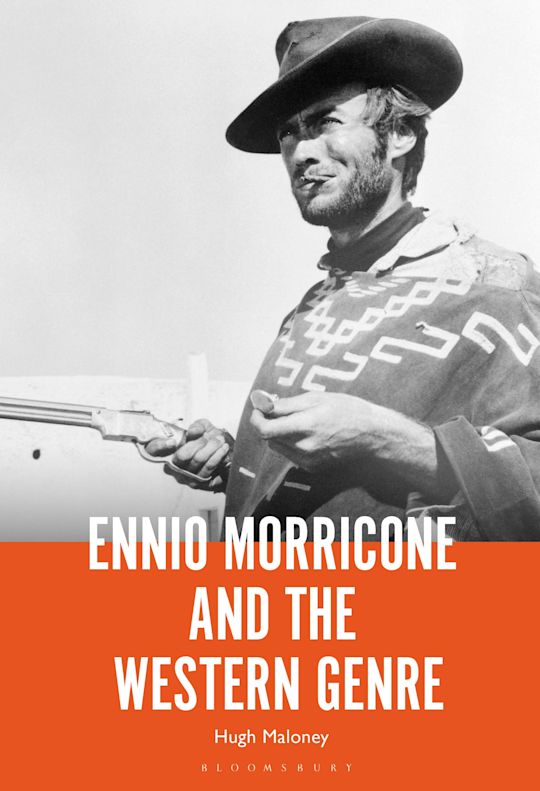
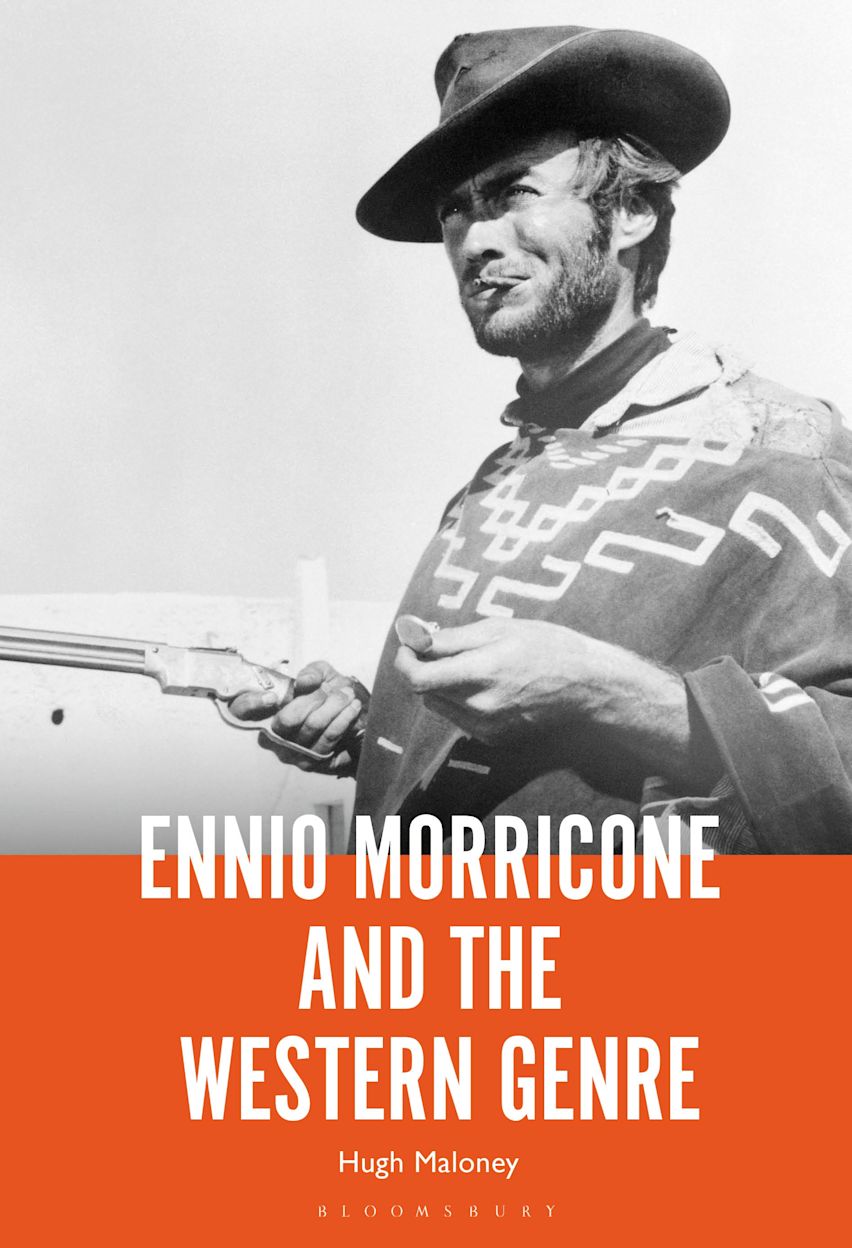
A study of Italian composer Ennio Morricone's creative engagement with the western film genre, surveying his original film scores in their generic, historical, industrial, and cultural contexts.
Ennio Morricone composed 34 scores for films released between 1963 and 2015; the success and impact of a small handful of these films in popular culture has caused the distinctive soundworld that he cultivated for the genre known as the Italian western (or the spaghetti western) to become a musical byword for the frontier, and the name Morricone itself to be virtually synonymous with the notion of western film music. And indeed, some of these definitive scores are ranked among the most canonic works in the history of film music generally.
Hugh Maloney's study ascertains the fundamental compositional characteristics of this output, while drawing out its salience in various contexts: western-genre film-scoring, Italian cinema, Morricone's creative practice and technical questions of film composition. Its most essential aim is to apprehend the composer's relationship with the western genre; although this is a notion often alluded to in discussions of the films of Sergio Leone, the composer's best-known collaborator, Maloney's book expands the discourse beyond this limited filmography to include the entirety of Morricone's experience composing for westerns, putting his practice front and centre. As he argues, this relationship is characterized by tensions, between innovation and tradition, acclaim and exasperation, and, for the composer himself, the forces of commerce and those of artistic integrity.
Table of Contents
List of Figures
List of Tables
Acknowledgements
Preface
Foreword by Emilio Audissino
Introduction
Part I: Orientation
1. Contexts
2. Charting Morricone's West
Part II: Soundtracking the Frontier
3. Compositional Techniques I
4. Compositional Techniques II
5. Music and Narrative
Part III: Beyond the Italian Western
6. The Hateful Eight
7. Legacy
Conclusions
Appendices
References
Index
Product details

| Published | Mar 05 2026 |
|---|---|
| Format | Ebook (Epub & Mobi) |
| Edition | 1st |
| Extent | 280 |
| ISBN | 9798765126585 |
| Imprint | Bloomsbury Academic |
| Publisher | Bloomsbury Publishing |

About the contributors
Reviews
-
With this new and refreshing monograph, author Hugh Maloney joins a rapidly growing number of authors who have written about the music and legacy of Italian composer Ennio Morricone. Citing an impressive list of sources from a variety of disciplines, including music theory, film musicology, film history, and social sciences, Maloney describes in meticulous detail the social, political, economic, technical, and cultural environment in which Morricone was destined to create his groundbreaking film scores for westerns. From Ennio Morricone and the Western Genre, the reader will gain an insight into Morricone's background as a composer, orchestrator, arranger, pop-music producer, and innovator that made it possible for him to create the “theme” to which other would create “variations.” Morricone's unique approach to timbre and musical form in the films of numerous directors, most notably Sergio Leone, has left an enduring mark on the soundtrack to the old west
Charles Frances Leinberger, Professor of Music, University of Texas at El Paso, USA
-
Maloney's book charts new ground in exploring Ennio Morricone's contributions to the Western genre. Moving beyond the celebrated Leone scores, it blends analytical and theoretical perspectives to illuminate the full breadth of the composer's craft
Maurizio Corbella, Associate Professor of Musicology, University of Milan, Italy
-
Taking Christopher Frayling's groundbreaking Spaghetti Westerns (1981) as a point of comparison and departure, I regard Hugh Maloney's new book Ennio Morricone and the Western Genre as a formidable state-of-the-research compendium on a very popular genre in the history of cinema; the Western reenvisioned in the early 1960s as 'Western all'italiana.' It gained worldwide acclaim in 1964 with the film A Fistful of Dollars, directed by Sergio Leone and scored by Ennio Morricone. Hugh Maloney's book traces the entire 'Western' cinematic career of Morricone until The Hateful Eight (2015), a late revisionist exemplar directed by Quentin Tarantino – an enormous body of movies that could have not passed the studio screening room without Ennio Morricone's music or music inspired by it. Given the vast number of analytical details skillfully clarified by the author, hardly a detail has been overlooked in this book. In fact, Maloney offers an exceptionally complete picture of Ennio Morricone, one of the most talented and enigmatic composers of our time.
Franco Sciannameo, CFA Distinguished Scholar and Professor of Music, Carnegie Mellon University, USA
-
Maloney provides new depth to our understanding of Morricone's importance to the Italian Western cycle, looking well beyond the masterworks of Sergio Leone even while acknowledging their significance. By meticulously placing Morricone's western oeuvre in its broader social and cultural contexts, this book allows us to appreciate him as both a supreme artist and a composer who played a decisive role in the success of an industrial system of popular filmmaking. Both fans and scholars of the Spaghetti Western will find their appreciation of its complexities enriched by this volume.
Austin Fisher, Associate Professor of Popular Culture, Bournemouth University, UK