- Home
- ACADEMIC
- Film & Media
- Film History
- Ernst Lubitsch's The Student Prince in Old Heidelberg
Ernst Lubitsch's The Student Prince in Old Heidelberg
The Art of Classical Hollywood
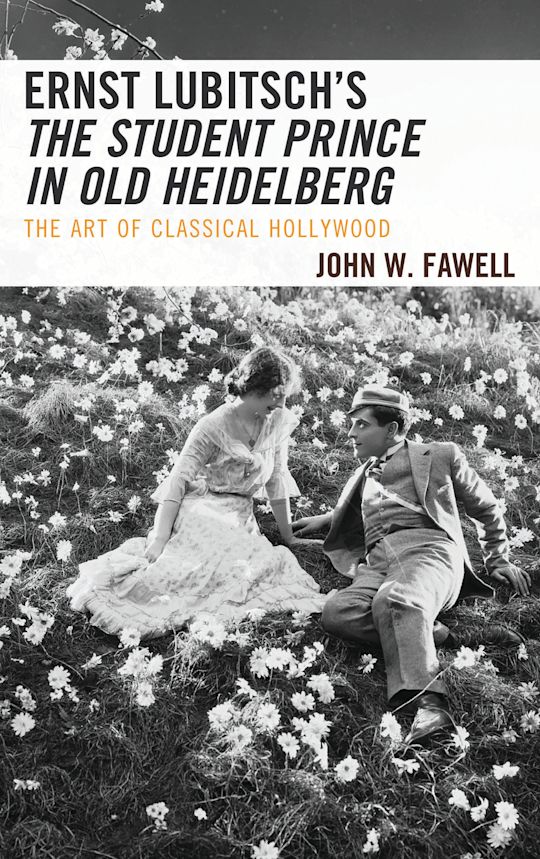
Ernst Lubitsch's The Student Prince in Old Heidelberg
The Art of Classical Hollywood

You must sign in to add this item to your wishlist. Please sign in or create an account
Description
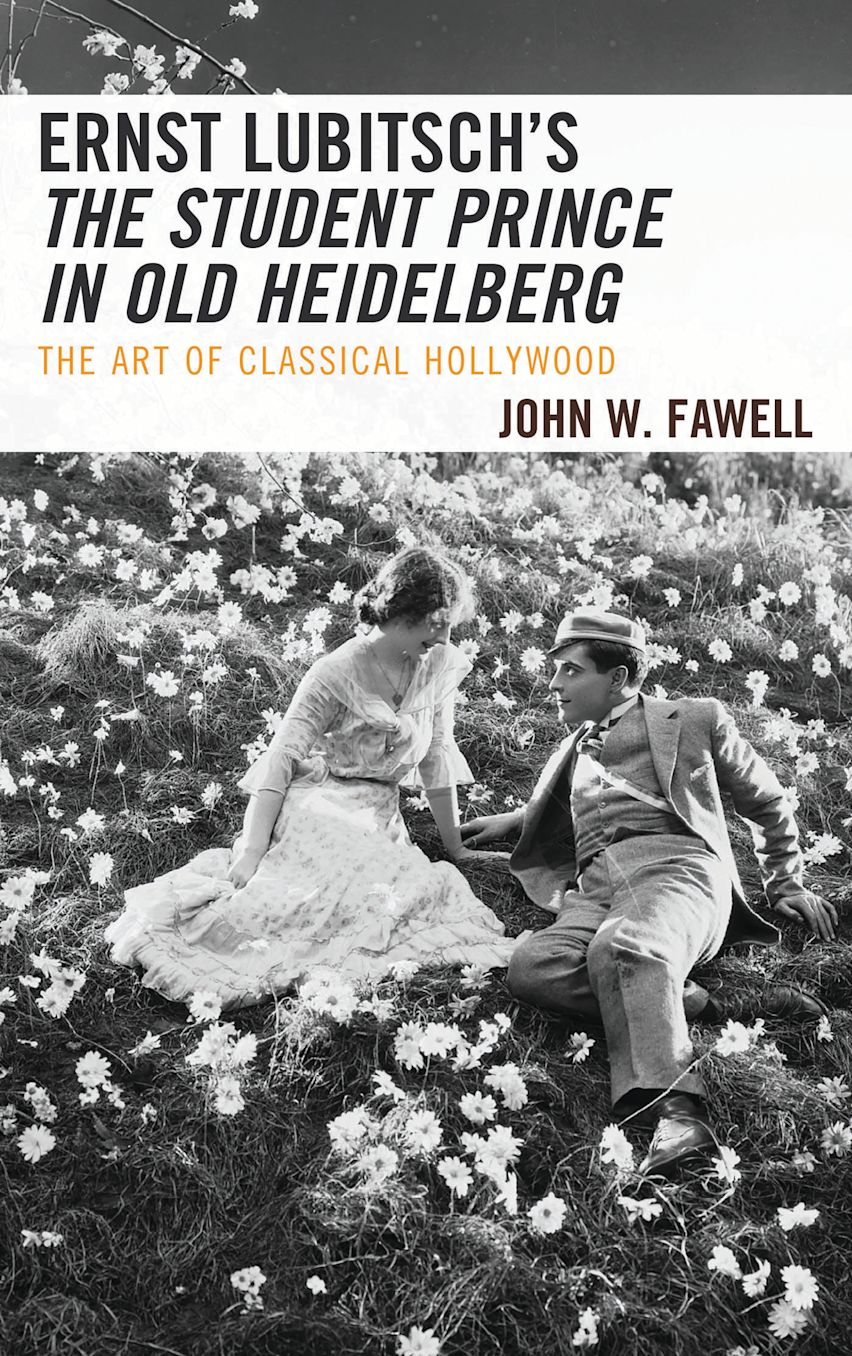
This book takes a close look at a film that has heretofore been significantly undervalued by film scholars: Ernst Lubitsch’s The Student Prince in Old Heidelberg. In so doing, it not only advocates for the elevation of the film within the canon of Lubitsch’s films but also for an appreciation of the certain kind of filmmaking that it represents—one favored in the classical era of Hollywood which is characterized by aesthetics, meticulous structure, and delicate understatement over explicit content or social relevance. This book argues that The Student Prince in Old Heidelberg has perhaps been neglected because of the tendency in contemporary film criticism to devalue films that are not overtly “serious” in their subject matter. The Student Prince in Old Heidelberg represents a master class in classical Hollywood technique, a kind of filmmaking that is characterized by charm, beauty, and elegant form and which chooses not to express its ideas explicitly but to encase them in the substance, structure, and very experience of the film.
Table of Contents
Chapter 1: Why the Neglect?
Chapter 2: The Rewards of Simplicity
Chapter 3: A Classical Sense of Balance
Chapter 4: A Larger Sense of Balance
Chapter 5: Matches
Chapter 6: Motifs
Chapter 7: The Art of Condensation
Chapter 8: Lubitsch’s Use of Off-screen Space
Chapter 9: A Measured Expressiveness
Chapter 10: Lubitsch and Actors
Chapter 11: Lubitsch, Shearer and Kathi
Chapter 12: What Shearer Brings to the Equation
Chapter 13: The Film’s “Ideas”
Chapter 14: Chaplin and Lubitsch
Chapter 15: Carl Davis’ Orchestral Accompaniments
Bibliography
Index
About the Author
Product details
| Published | Jun 20 2018 |
|---|---|
| Format | Ebook (Epub & Mobi) |
| Edition | 1st |
| Extent | 200 |
| ISBN | 9781498578059 |
| Imprint | Lexington Books |
| Illustrations | 13 b/w photos |
| Publisher | Bloomsbury Publishing |
About the contributors
Reviews
-
‘Lubitsch can’t wait!’ clamor fans and scholars of this consummate and delicate director as they ask for renewed appreciation of his resonant art. John Fawell answers their clarion call with an analysis that is eloquent and elegant, ever so attuned to the soft and subtle quietudes of Lubitsch’s art as exhibited in the key film The Student Prince in Old Heidelberg. This is a lovely and loving study that well shows Lubitsch’s pride of place in Hollywood silent cinema.
Dana Polan, New York University
-
A lovingly detailed celebration of a neglected silent film that is also a ringing defense of the marriage between Ernst Lubitsch’s unerringly delicate touch and the much-maligned MGM studio style—and, more generally, of a whole approach to filmmaking and filmgoing that has largely fallen out of favor, one that treasures simplicity, romance, sincerity, elegance, grace, sentiment, and apparently artless art. Can a revival of The Student Prince in Old Heidelberg, and indeed of all these virtues, be far behind?
Thomas M. Leitch, University of Delaware
-
There is no more generous or insightful a guide to the mystery and artistry of Hollywood than John W. Fawell. His previous work has explored how Hollywood’s broad-stroke storytelling authorized an elaboration of sentiment and style into realms of true seriousness, even in films typically understood as frivolous. In this study of Ernst Lubitsch’s The Student Prince in Old Heidelberg, Fawell offers further evidence on Hollywood’s behalf by showing, in careful and illuminating detail, how Lubitsch treated an already well-known story, on the risky but rewarding premise that a ‘silent’ film better illustrates the ‘musical’ aesthetic of Hollywood than subsequent ‘talkies.’ Lubitsch scholars will be grateful for Fawell’s animated reading of The Student Prince, but his repeated allusions to other films and filmmakers—Capra, Chaplin, Dryer, Eisenstein, Ford, Godard, Hawks, Hitchcock, Sturges, Tati, Welles, Wilder—will make this book attractive to a broad readership.
Leland Poague, Iowa State University
-
John Fawell's criticism is comprehensive and refreshingly reader-friendly. While considering various angles, his work presents a unified analysis that appeals to experts and newcomers. With Lubitsch’s The Student Prince in Old Heidelberg, Fawell delivers the definitive reading of a rediscovered classic, as probing as it is heartfelt.
Matthew Sorrento, Rutgers University, Camden
ONLINE RESOURCES
Bloomsbury Collections
This book is available on Bloomsbury Collections where your library has access.