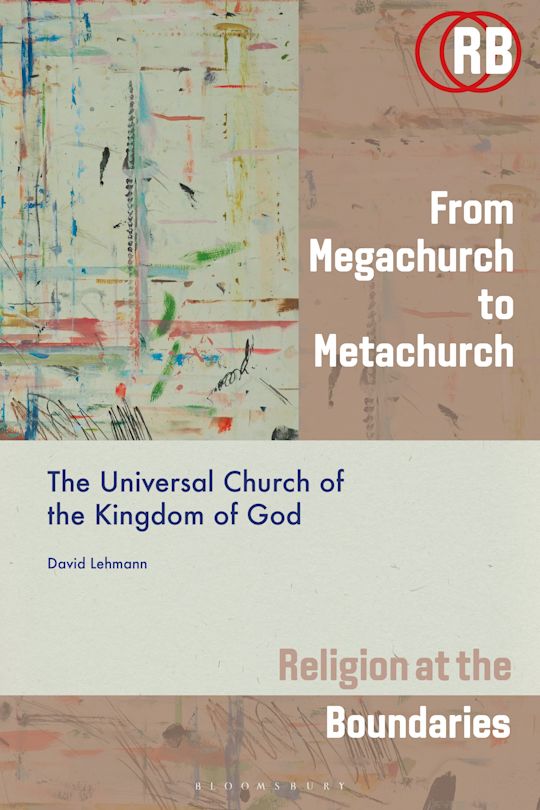

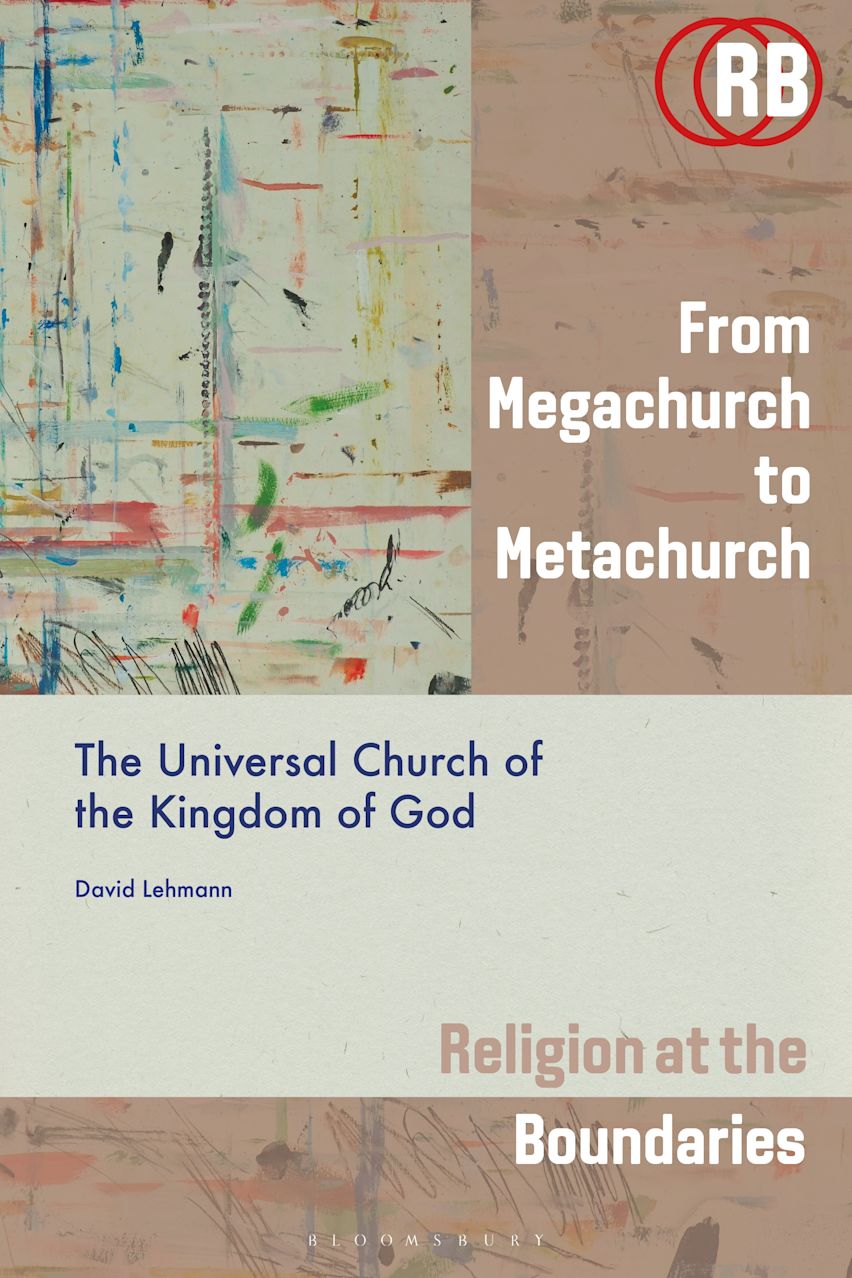
From Megachurch to Metachurch
The Universal Church of the Kingdom of God
Buying pre-order items
Ebooks and Audiobook
You will receive an email with a download link for the ebook or audiobook on the publication date.
Payment
You will not be charged for pre-ordered books until they are available to be shipped. Pre-ordered ebooks will not be charged for until they are available for download.
Amending or cancelling your order
For orders that have not been shipped you can usually make changes to pre-orders up to 72 hours before the publishing date.
Payment for this pre-order will be taken when the item becomes available
- Delivery and returns info
-
Free US delivery on orders $35 or over
Description
Building on thirty years accompanying the church's growth, this book is the first to treat the Universal Church of the Kingdom of God (UCKG) as a global organization and the first to balance the devotional and ritual life of the church with its impact on politics and the media.
Based in Brazil, the UCKG claims to have 17,000 bishops and pastors, 12,300 places of worship and 10 million followers in 135 countries. Within a lifetime of fifty years it has become a model for neo-Pentecostalism worldwide epitomized by its mammoth 'Temple of Solomon' in São Paulo.
Drawing on ethnographic research in 13 countries from Brazil and Spanish America to Europe, North America and Israel, David Lehmann demonstrates how the church's practices, and those of Pentecostalism in general, are reshaping contemporary concepts of ritual and the supernatural. It further argues that the Church's use of social media to spread its teachings, and its leader Edir Macedo's extensive political, business and mediatic interests, have paved the way to a fusion of religious and secular domains.
The church's bishops, pastors and assistants mobilize their followers by age and gender and channel their commitment into activities ranging from fundraising to seniors' gatherings to prison and hospital visiting. Gender emerges repeatedly as a central theme, expressed in the phenomenon of the childless pastoral couple, gendered self-improvement networks, the church's messaging on relationships, 'love therapy' and even the provision of dating apps for the faithful.
Exceeding previous work in scope and theoretical range, this book opens completely new perspectives on Pentecostalism worldwide.
Table of Contents
Acknowledgements
Glossary
Introduction: Setting the Stage
1. The Holy Spirit
2. The Apparatus
3. The Pastoral Couple: Backbone of the Universal Church
4. Love Therapy on the Steps of the Templo
5. Gender and Its Performance
6. Ritual and the Supernatural
7. Reciprocity, Prosperity and Sincerity
8. Politics
9. Biblical Telenovelas and the Ecosystem
Conclusion: Reconfiguration of Religion
Bibliography
Index
Product details

| Published | Sep 03 2026 |
|---|---|
| Format | Hardback |
| Edition | 1st |
| Pages | 240 |
| ISBN | 9781350610002 |
| Imprint | Bloomsbury Academic |
| Illustrations | 6 bw illus |
| Dimensions | 9 x 6 inches |
| Series | Religion at the Boundaries |
| Publisher | Bloomsbury Publishing |
Reviews
Related Titles