
- Home
- ACADEMIC
- Politics & International Relations
- African Politics
- Governance and Democracy in Africa
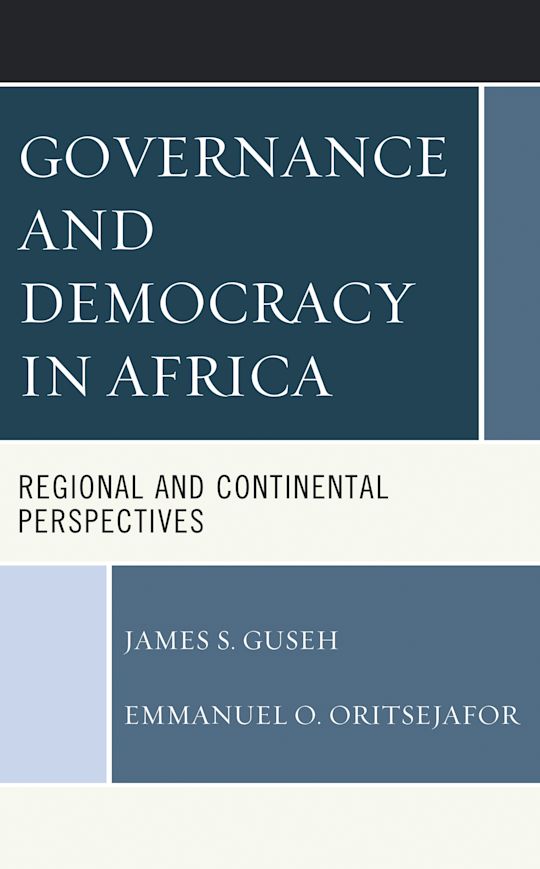
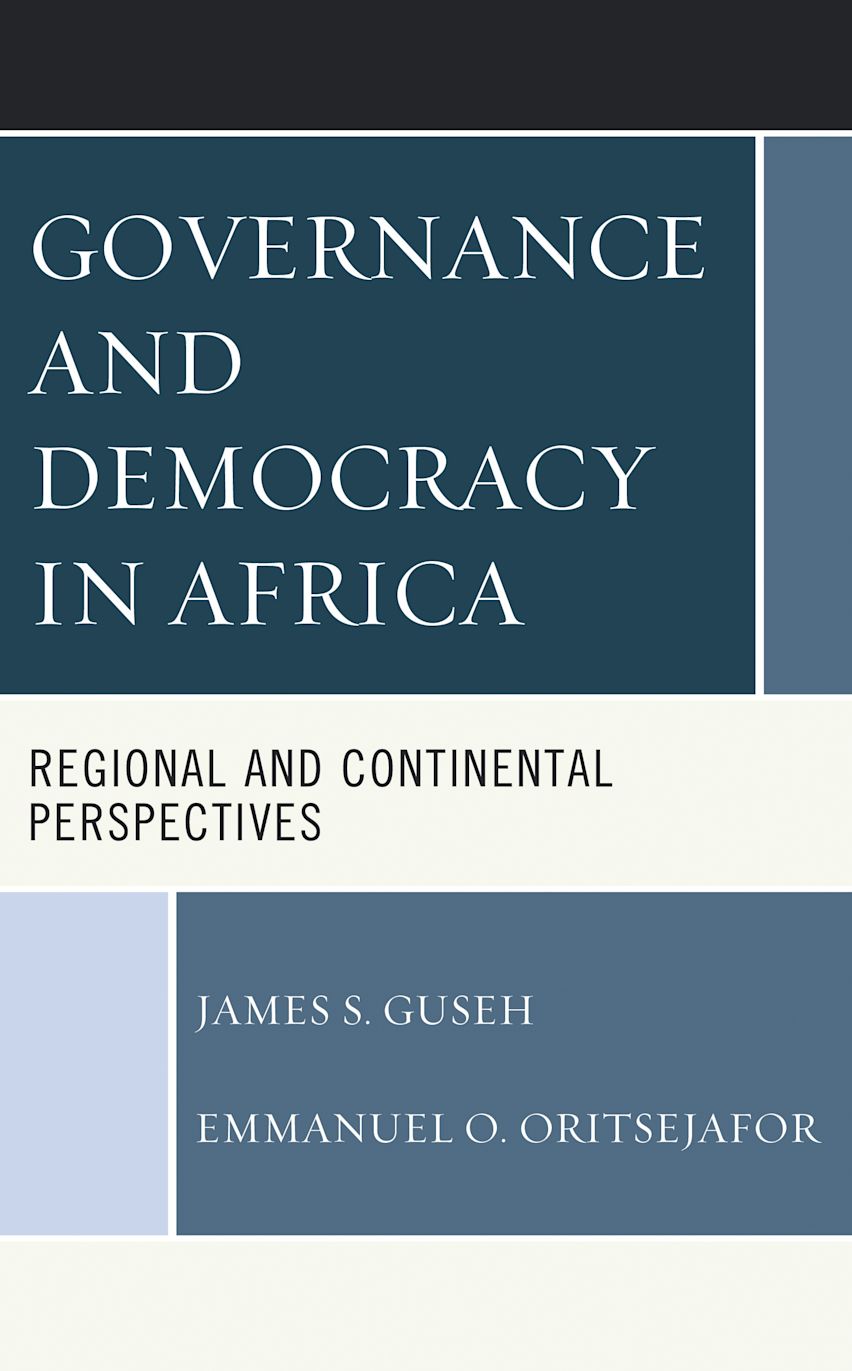
Governance and Democracy in Africa
Regional and Continental Perspectives
Governance and Democracy in Africa
Regional and Continental Perspectives
This product is usually dispatched within 3 days
- Delivery and returns info
-
Free US delivery on orders $35 or over
You must sign in to add this item to your wishlist. Please sign in or create an account
Description
This book looks at the fundamental issue of governance in Africa. After half a century of experimenting with democratic institutions, African countries are still ambivalent about the complete or absolute adoption of this form of governance. Africa lost tremendous human and natural resources in the struggle for political and economic independence. What form of governance African leaders adopt will determine how worthwhile this sacrifice has been to the African people. This issue is the major challenge facing Africa, and addressing it is of high urgency. Employing a political economy framework, this book provides some insights into to dealing with this complex issue of democratic governance in Africa.
Table of Contents
Chapter Two: Concepts of Democratic Governance
Chapter Three: Democratic Governance in Africa: Trends and Assessment
Chapter Four: Democracy and Economic Growth in Africa: Case Studies of South Africa and Ghana
Chapter Five: Government Size, Political Freedom and Economic Growth: The Case Study of Nigeria
Chapter Six: The African Growth and Opportunity Act and Economic Growth in Africa
Chapter Seven: Democracy and Governance in Africa: The Continental
Appendix A
Appendix B
Appendix C
Appendix D
Appendix E
Bibliography
About the Contributors
Product details
| Published | Oct 28 2019 |
|---|---|
| Format | Paperback |
| Edition | 1st |
| Extent | 140 |
| ISBN | 9781498533010 |
| Imprint | Lexington Books |
| Illustrations | 10 tables; |
| Dimensions | 9 x 6 inches |
| Publisher | Bloomsbury Publishing |
About the contributors
Reviews
-
Overall, the book has immense contributions to the body of knowledge in the area. It has concisely presented the political economy of post-independence African countries. It is commendable in analyzing the “democracy-development” nexus and in pointing out the persisting development and governance challenges that African countries are embroiled in. Moreover, it appeals to further researches on the subject. . . very insightful contribution. . . It is recommendable to everyone having the curiosity about African governance systems.
African Studies Quarterly
-
Guseh and Oritsejafor have produced an innovative text that surveys African politics using a political economy approach. Instead of focusing on how African political leaders have constructed various versions of 'failed states,' the authors bring an African perspective to the question of how states govern impoverished citizens while accumulating enormous wealth from the natural resources of the continent. This study encompasses the continent as a whole, demonstrating that the economic dynamics of North Africa are not distinct from the sub-Saharan region. The authors provide a quantitative analysis of African trade that reveals how the continent fits into the global capitalist system. This analysis also demonstrates how transparent structures of power, and respect for human rights, contributes to “development” and reducing income inequalities. At a time when the most productive African states are the ones that generate the greatest inequality, this book invites a conversation about how Africans can manage state structures to redefine development for the benefit of the people of Africa as a whole.
Allan D Cooper, North Carolina Central University
-
Governance and Democracy in Africa is an outstanding contribution to the scholarly literature on development studies and addresses some of the social, political and economic factors that are inhibiting democratic consolidation in Africa, providing a comprehensive overview of how these factors have contributed to regime changes on the continent. By providing case studies on democratic consolidation in South Africa, Ghana, and Nigeria, and on continental framework that began with the Monrovia Plan, this book provides a continental and sub-regional response to the challenges of democratic consolidation and development in Africa.
Andrew Ewoh, Texas Southern University
ONLINE RESOURCES
Bloomsbury Collections
This book is available on Bloomsbury Collections where your library has access.