Historicizing Academic Freedom
On Universities, Scholarly Indeterminacy, and World Ordering
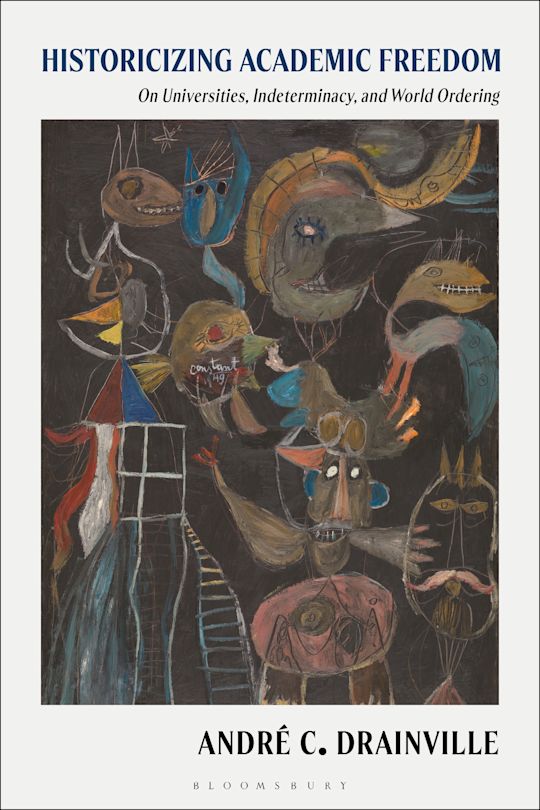

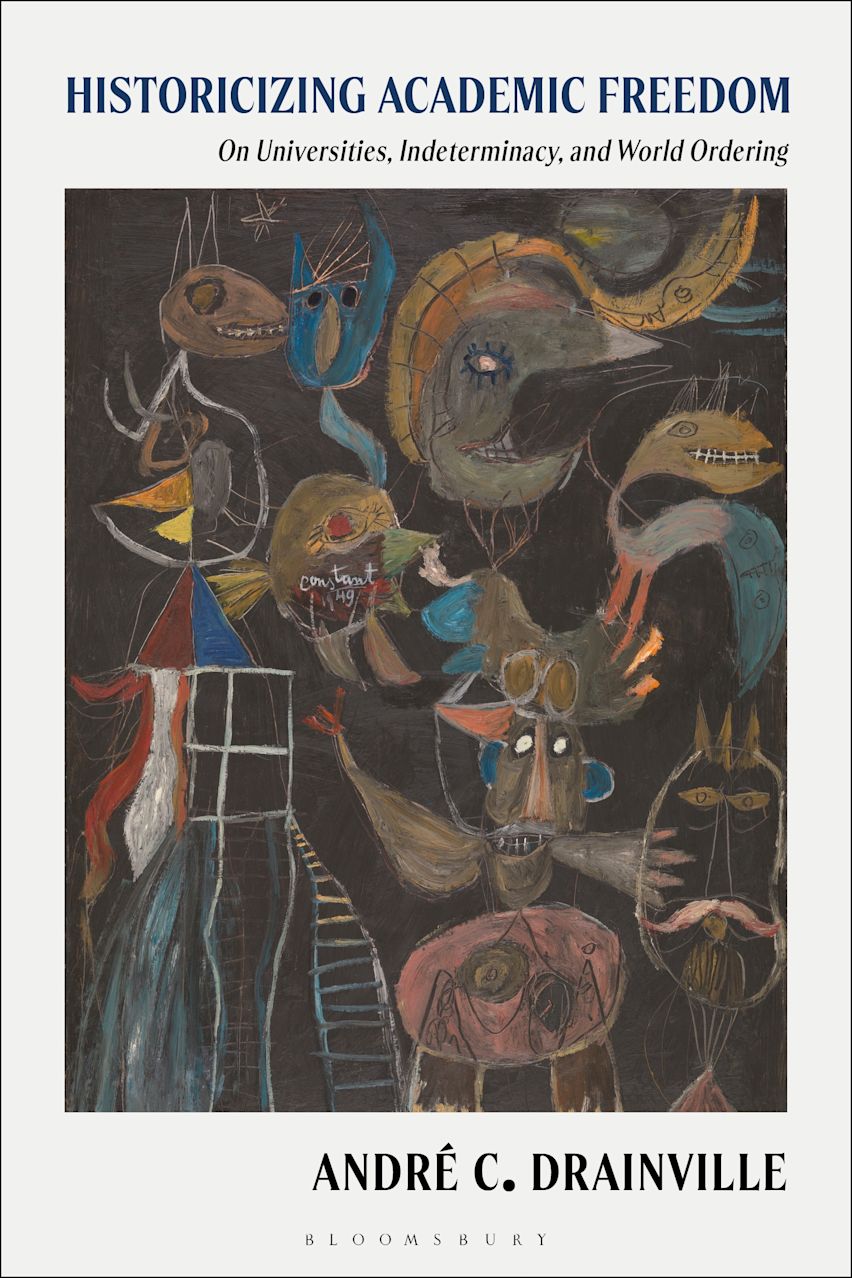
Historicizing Academic Freedom
On Universities, Scholarly Indeterminacy, and World Ordering
Payment for this pre-order will be taken when the item becomes available
Description
André Drainville gives a provocative and necessary intervention into discussions of academic freedom, showing its connection to the evolving social relations of knowledge and power over the last thousand years. Rather than assuming that academic freedom is an established and well-defined, if threatened, right, Drainville historicizes the concept, understanding scholarly struggles for intellectual autonomy as part of the disputed, variously situated, processes of world ordering. Tracing instances of the freedom to think through the longue durée, he sets out a materialist history of the evolving relations between economic and social orders and the conditions of knowledge production from 12th century China to contemporary US campuses.
In order to resituate debates about academic freedom within broader discussions of global forms of power and counter-power, the book draws on black existentialism, English labor history, critical political economy; French structuralist state theory; theories of global patriarchy; structural anthropology; postcolonial theory. Focussing on the little tradition of scholarly action, the book discusses two dozen moments in the development of the social relations of knowledge production that are not typically rendered as part of the (apparently) coherent and continuous dominant discourse of academic freedom. These span historical contexts from the pre-capitalist world economies, the formation of modern capitalism, the post-World War 2 world ordering, to the contemporary 'new knowledge economy'. In each case, Drainville highlights how distinct structures of world order opened up, or narrowed, possibilities for scholars to institute self-regulated relations of knowledge production and how, above and beyond circumstantial considerations, scholars have time and again struggled for autonomy and indeterminacy.
Rich in detail yet theoretically sophisticated, this book is an indispensable resource for those concerned with academic freedom and intellectual autonomy, historically and in the new knowledge economy.
Table of Contents
Timeline
Introduction
Chapter 1: The Mongol moment
Chapter 2: A world-system of universities
Chapter 3: The crisis of universities
Chapter 4: A global system of knowledge production
Conclusion: Freedom in world ordering now
Bibliography
Index
Product details

| Published | Aug 06 2026 |
|---|---|
| Format | Ebook (PDF) |
| Edition | 1st |
| Extent | 272 |
| ISBN | 9781350576025 |
| Imprint | Bloomsbury Academic |
| Publisher | Bloomsbury Publishing |
Reviews
Related Titles