- Home
- ACADEMIC
- Psychology
- Psychopathology & Clinical Psychology
- Human Strengths and Resilience
Human Strengths and Resilience
Developmental, Cross-Cultural, and International Perspectives
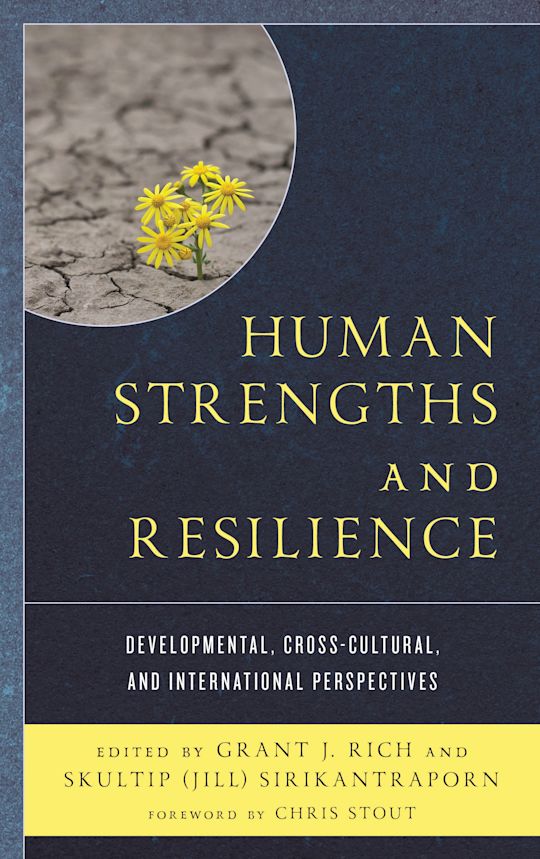
Human Strengths and Resilience
Developmental, Cross-Cultural, and International Perspectives

This product is usually dispatched within 3 days
- Delivery and returns info
-
Free US delivery on orders $35 or over
You must sign in to add this item to your wishlist. Please sign in or create an account
Description
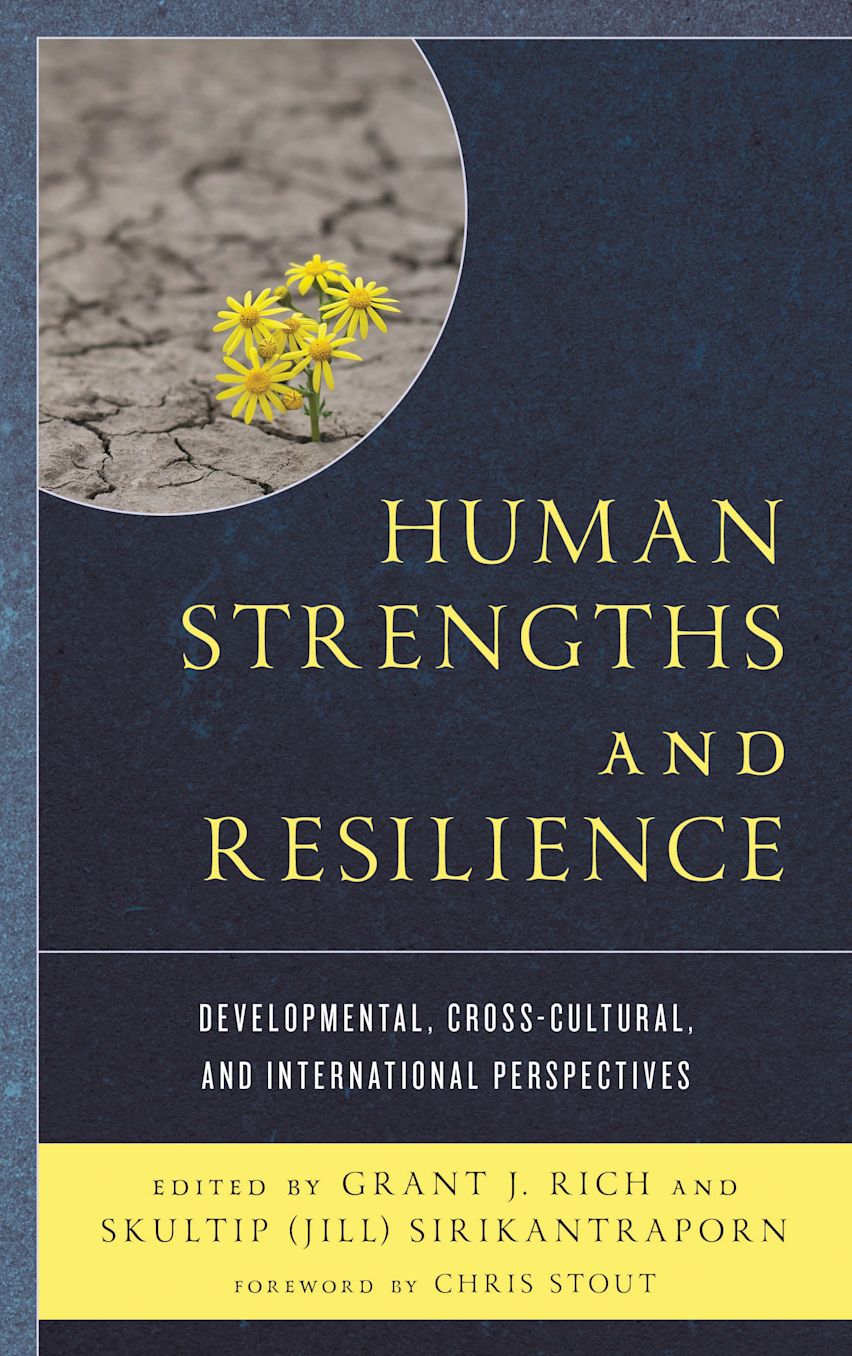
Human and Strengths fills a gap in current literature on trauma survivors. Co-editors Grant J. Rich and Skultip (Jill) Sirikantraporn have assembled an international group of leading contributors who have taught, counseled, consulted, and conducted research in all regions of the world, including North America, Europe, Asia, Africa, the Pacific Region, Latin America, the Caribbean Region, and the Middle East. Contributors to this edited collection use their expertise to highlight positive psychology and strength-based approaches to post-traumatic growth and resilience in understudied, developing nations like Cambodia, Haiti, India, Syria, Armenia, Sierra Leone, Taiwan, Guatemala, and South Africa.
Table of Contents
Grant Rich and Skultip (Jill) Sirikantraporn
Chapter 1: The Concept of Posttraumatic Growth in a Sample of Undergraduates from India: A Mixed Methods Study
Skultip (Jill) Sirikantraporn, Grant J. Rich, and Julie Badaracco
Chapter 2: The Concept of Posttraumatic Growth in an Adult Sample from Port-Au-Prince, Haiti: A Mixed Methods Study
Grant Rich, Skultip (Jill) Sirikantraporn, and Wismick Jean-Charles
Chapter 3: The Concept of Posttraumatic Growth in a Cambodian Sample: A Grounded Theory
Study
Skultip (Jill) Sirikantraporn, Grant J. Rich, and Nashaw Jafari
Chapter 4: Resilience in Guatemala: Contextual Overview with Future Perspectives
Tannia de Castañeda and María del Pilar Grazioso
Chapter 5: Resilience in Taiwan: The Shaping Forces of Confucian Cultural Context and Beliefs about Adversity
Ching-Yu (Soar) Huang
Chapter 6: The Resilience Processes of South African Adolescent Girls with Histories of Sexual Abuse
Sadiyya Haffejee and Linda Theron
Chapter 7: Resilience and Strengths in Syrian Refugees
Naji Abi-Hashem
Chapter 8: Meaningfulworld Trauma Outreach and Prevention Across Cultures: Utilizing the 7-Step Integrative Healing Model for Resilience and Meaning-Making
Ani Kalayjian and Daria Diakonova-Curtis
Chapter 9: Resilience and Recovery in Natural Disasters and Epidemics: Comparisons,
Challenges, and Lessons Learned from Train-the-Trainer Projects
Judy Kuriansky, Alexandra Margevich, Wismick Jean-Charles. andRussell Daisey
Product details
| Published | Sep 11 2019 |
|---|---|
| Format | Paperback |
| Edition | 1st |
| Pages | 234 |
| ISBN | 9781498554855 |
| Imprint | Lexington Books |
| Dimensions | 9 x 6 inches |
| Publisher | Bloomsbury Publishing |
About the contributors
Reviews
-
Combining principles of positive psychology with cross-cultural perspectives, Rich (independent scholar), Sirikantraporn (California School of Professional Psychology), and their team of international contributors focus on human strengths and resilience in understudied nations. The volume is novel and timely in its framework of a “strength-based positive psychology approach to posttraumatic growth (PTG) and resilience” (page xviii) in contrast to a more traditional focus on PTSD and trauma in an international context. Most of the chapters implement a developmental perspective, highlighting lifespan growth. Using different methodological approaches (e.g., mixed methods, grounded theory) and age-varied samples, the authors examine existing theories on resilience and their application to a variety of contexts. These contexts include PTG in Indian undergraduates, Haitian adults, and Cambodian young adults; the case of Precious in South Africa; and resilience in Guatemala, in Taiwan, and among Syrian refugees. The last two chapters provide a more practice-based approach utilizing the 7-Step Integrative Healing Model for Resilience and Meaning-Making and Train-the-Trainer Projects. In each case, an overview of the national context is presented in relation to general and culturally specific trauma-inducing events. This volume is a must read for psychologists interested in both research and application of human strengths and resilience.
Summing Up: Highly recommended. Graduate students through faculty and professionals.Choice Reviews
-
Grant Rich and Jill Sirikantraporn have provided readers with a brilliant compilation of chapters written by renowned psychologists from all over the world. The chapters in this volume provide an inclusive, international perspective on the concept of resilience. This volume seamlessly integrates examples of human strength across cultures and communities, while also making a noteworthy effort to stress the importance of resilience for human growth. The content in this book presents itself as an essential resource to enhance one's own multiculturalism and global perspectives.
Florence L. Denmark, PhD, Pace University and former president of the American Psychological Association
-
Drs. Grant Rich and Jill Sirikantraporn are bona fide experts on resilience who have brought together a remarkable team to present their unique work about resilience from a strengths perspective. Many of the contributors are my personal friends, who are noted international psychologists whose work I know and respect. Reading this book will allow readers a valuable view of resilience in a new, internationalized perspective.
Danny Wedding, APA Council of Representatives member representing Division 12
-
The hallmark of resilient people is their ability to be firmly grounded in today, to benefit from yesterday, and to imagine themselves in tomorrow. Grant J. Rich and Jill Sirikantraporn’s book, Human Strength and Resilience: Developmental, Cross-Cultural, and International Perspectives, focuses on this important dynamic which is the essence of post-traumatic growth. Cross-cultural examples of recovery from environmental trauma are highlighted throughout this amazing volume. I highly recommend it to readers across the world.
Darlyne G. Nemeth, PhD, MP, Neuropsychology Center of Louisiana, LLC
-
This is a needed global book in our age of globalization. The collection of contributions from international experts is cross-cultural in the best sense of the term, providing new contributions to empirical research, theory development, and practice. Practitioners as well as researchers in many fields will find it a valuable addition to the literature on post-traumatic growth and resilience.
Fathali M. Moghaddam, Georgetown University
-
Hopeful in a hopeless world? How can policy makers and health care clinicians worldwide cope with the 'Enormity Problem’, i.e., problems of human violence and global destruction that seem impossible to solve? Grant J. Rich and Skultip (Jill) Sirikantraporn, in a culturally and scientifically sound manner, address the latter through many edited chapters based in Syria, Guatemala, Cambodia, Haiti, and other natural disaster and violence affectedenvironments. Their focus in each setting on resiliency and post traumatic growth creates a new story of successful coping by highly affected persons, communities, and health care workers that needs to be told and studied. Congratulations to the editors for bringing forward a new way of thinking and behaving toward our violent and wounded world.
Richard F. Mollica, MD, Harvard Program in Refugee Trauma and Harvard Medical School
ONLINE RESOURCES
Bloomsbury Collections
This book is available on Bloomsbury Collections where your library has access.