- Home
- ACADEMIC
- Literary Studies
- British and Irish Literature
- Making Love
Making Love
Sentiment and Sexuality in Eighteenth-Century British Literature
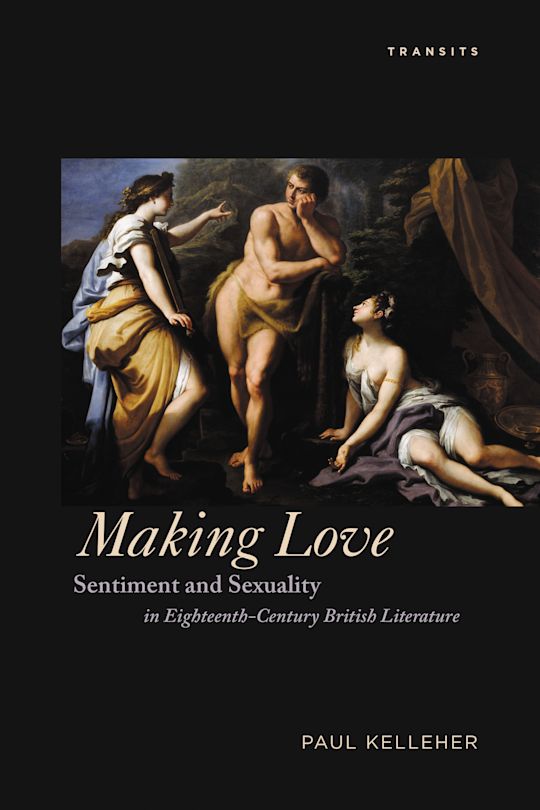
Making Love
Sentiment and Sexuality in Eighteenth-Century British Literature

You must sign in to add this item to your wishlist. Please sign in or create an account
Description
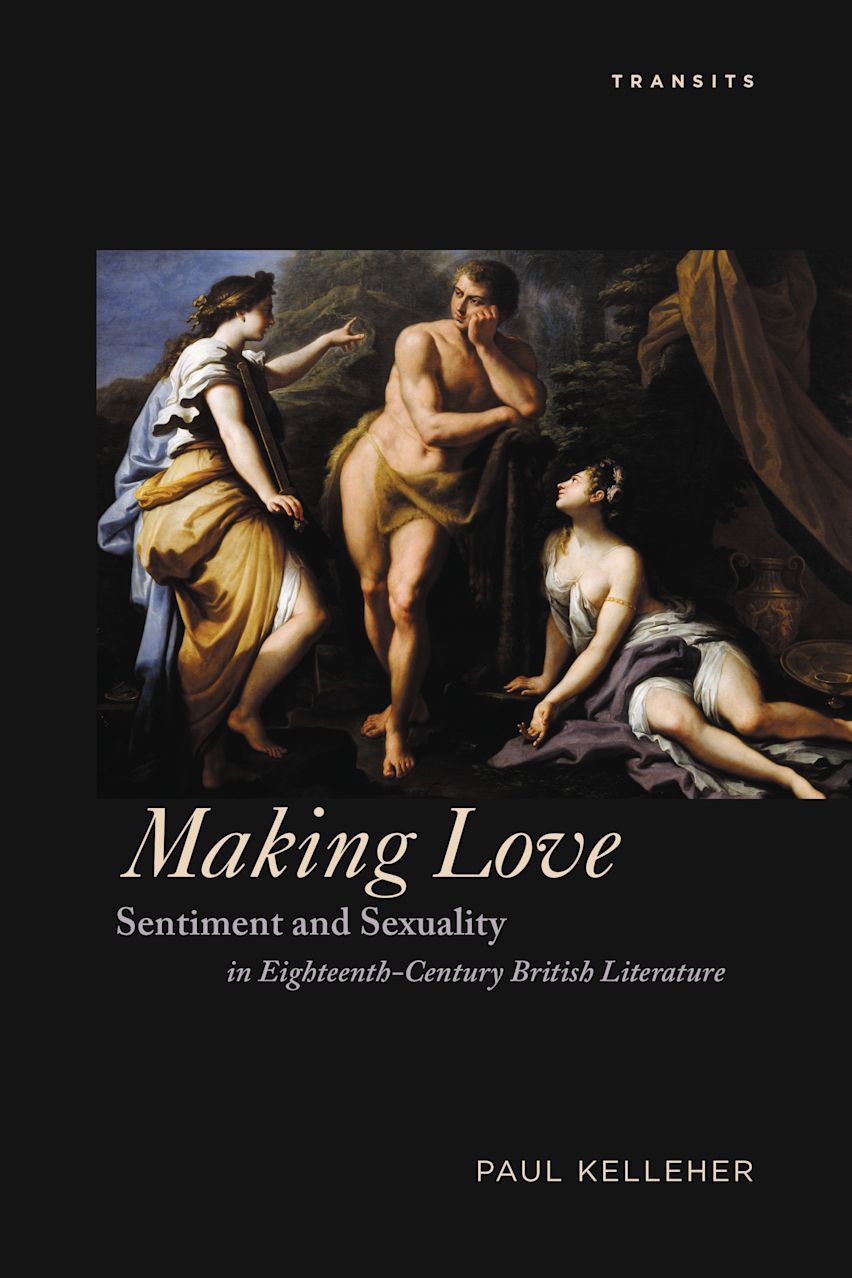
In Making Love: Sentiment and Sexuality in Eighteenth-Century British Literature, Paul Kelleher revises the history of sexuality from the vantage point of the literary history of sentimentalism. Kelleher demonstrates how eighteenth-century British philosophers, essayists, and novelists fundamentally reconceived the relations among sentiment, sexuality, and moral virtue. It is his contention that sentimental discourse, both philosophical and literary, posited heterosexual desire as the precondition of moral feeling and conduct. The author further suggests that sentimental writers fashioned the ideal of conjugal love as an ideological antidote to the theories of self-love and self-interest found in the works of Thomas Hobbes and Bernard Mandeville. Heterosexual desire and its culmination in conjugal love, in other words, were represented as the privileged means for an individual to transcend self-love and to develop a moral sensibility attuned to the thoughts and feelings of others. At the same time, Kelleher suggests, other pleasures and desires—particularly those rooted in same-sex eroticism—were increasingly depicted as antithetical to conjugal love and, thus, were morally devalued and socially disenfranchised. Kelleher's argument unfolds through close readings of a variety of texts, including Shaftesbury’s Characteristics of Men, Manners, Opinions, Times, Joseph Addison and Richard Steele’s the Tatler and the Spectator, Eliza Haywood’s Love in Excess, Samuel Richardson’s Pamela, and Henry Fielding’s Tom Jones. Although these texts embody diverse rhetorical strategies and thematic concerns, he shows how they collectively reinforce an overarching sentimental ideology: on the one hand, heterosexual desire and conjugal love become synonymous with sympathy, benevolence, and moral goodness, while on the other hand, same-sex desire is pathologized as a selfish withdrawal from procreation, domesticity, sociability, and ultimately, “humanity” itself.
Table of Contents
Introduction: Heterosexuality; or, A Problem in Modern Ethics
Chapter 1: Shaftesbury and the Beauty of Virtue
Chapter 2: Love Within Reason: Addison and Steele Among the Mollies
Chapter 3: Love in Excess and the Ecstasy of Sympathy
Chapter 4: Pamela and the Passion for Virtue
Chapter 5: Tom Jones and the Virtues of Sexuality
Afterword
Notes
Bibliography
Index
About the Author
Product details
| Published | Jul 16 2015 |
|---|---|
| Format | Ebook (Epub & Mobi) |
| Edition | 1st |
| Pages | 270 |
| ISBN | 9781611486940 |
| Imprint | Bucknell University Press |
| Series | Transits: Literature, Thought & Culture, 1650–1850 |
| Publisher | Bloomsbury Publishing |
About the contributors
Reviews
-
Kelleher's analysis of the discourse of conjugal heterosexual desire as a state of moral transcendence that increases sympathy and understanding toward others makes a valuable contribution to the fields of Eighteenth Century studies, Affect Theory and scholarship on the history of sexuality.... Kelleher's exploration of conjugal heterosexual desire as morally enriching is a thought-provoking study that covers new ground and broadens future approaches to literature produced in both the eighteenth and nineteenth centuries.
New Perspectives on the Eighteenth Century
-
Kelleher’s analysis is unique in its focus on the remediation of heterosexuality itself in these works.... Making Love presents a necessary argument that suggests challenging lines of inquiry into sexuality in literature and philosophy.
The Shandean
-
Paul Kelleher’s Making Love represents the deep and rich research of a topic that has been overlooked in much of the rage of interest in sexuality studies in the period. His study of the idealization of conjugal love in the early decades of the eighteenth century is nothing less than miraculous in the connections it makes and the arguments it articulates. Not only deeply learned on the topic of eighteenth-century philosophy, Kelleher also employs modern theorists like Michel Foucault and Jürgen Habermas, in order to place his argument in conversation with other historians of sexuality. The result is a deeply informed engagement with everyone who has written compellingly about these topics. This study takes its place among the very best books in this field.
George E. Haggerty, Distinguished Professor of English, University of California, Riverside
-
Making Love breaks new conceptual ground. Locating sexuality within a broad matrix of discursive fields, and tracing the underpinnings of a new conjugality to the discourses of sympathy and sociability, Kelleher shows how marriage became, in the eighteenth century and especially for men, the foundation for the public good. Making Love offers a powerful, shapeshifting companion to classic studies of domesticity, gender, and sensibility. By reading what he calls 'sentimental heterosexuality' through a queer lens, Kelleher brilliantly reshapes our understanding of English philosophy and fiction alike.
Susan S. Lanser, Professor of Comparative Literature, English, & Women's, Gender, and Sexuality Studies, Brandeis University
-
The analyses of literature and philosophy in this monograph will be of strong interest and use to eighteenth-century scholars working on a wide range of topics precisely because of the broad impact of Kelleher’s central thesis. . . . It may seem dramatic to suggest that Making Love changes everything, but given Kelleher’s rich lessons, together with the massive reach of heterosexual hegemony, I am convinced that it does.
Eighteenth-Century Fiction
ONLINE RESOURCES
Bloomsbury Collections
This book is available on Bloomsbury Collections where your library has access.