Models of the Mind
How Physics, Engineering and Mathematics Have Shaped Our Understanding of the Brain
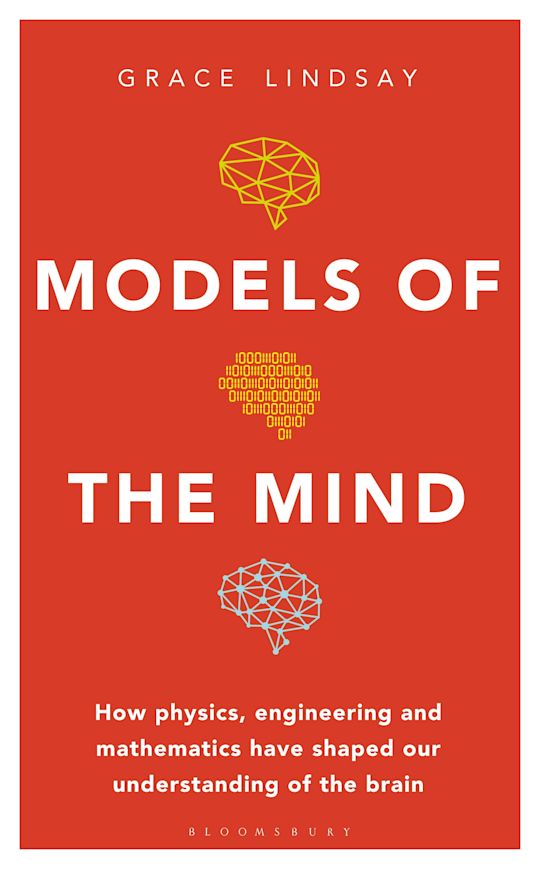

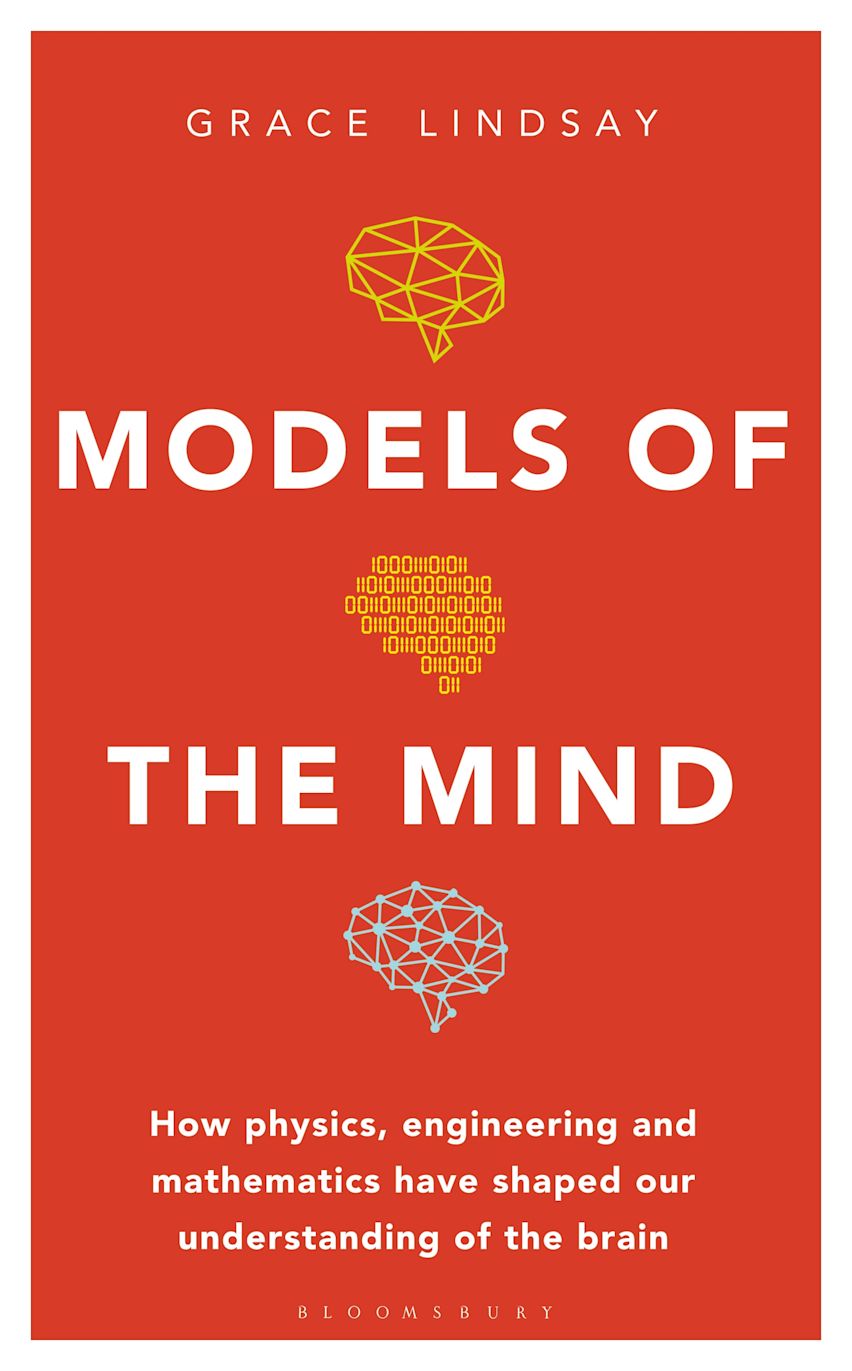
Models of the Mind
How Physics, Engineering and Mathematics Have Shaped Our Understanding of the Brain
Global Discount Test - BB Non-Fiction
Description
The human brain is made up of 85 billion neurons, which are connected by over 100 trillion synapses.
For more than a century, a diverse array of researchers searched for a language that could be used to capture the essence of what these neurons do and how they communicate – and how those communications create thoughts, perceptions and actions. The language they were looking for was mathematics, and we would not be able to understand the brain as we do today without it.
In Models of the Mind, author and computational neuroscientist Grace Lindsay explains how mathematical models have allowed scientists to understand and describe many of the brain's processes, including decision-making, sensory processing, quantifying memory, and more. She introduces readers to the most important concepts in modern neuroscience, and highlights the tensions that arise when the abstract world of mathematical modelling collides with the messy details of biology.
Each chapter of Models of the Mind focuses on mathematical tools that have been applied in a particular area of neuroscience, progressing from the simplest building block of the brain – the individual neuron – through to circuits of interacting neurons, whole brain areas and even the behaviours that brains command.
Lindsay examines the history of the field, starting with experiments done on frog legs in the late eighteenth century and building to the large models of artificial neural networks that form the basis of modern artificial intelligence. Throughout, she reveals the value of using the elegant language of mathematics to describe the machinery of neuroscience.
Accessibility Information
Additional accessibility information
- EPUB 3.0
- Conforms with the requirements of EPUB Accessibility Spec v1.1
- WCAG level AA
- WCAG v2.2 compliant
- accessibility@bloomsbury.com
Hazards
The publication contains no hazards
Support for non-visual reading
- No accessibility features offered by the reading system, device or reading software are disabled or otherwise unusable with the product
- Has alternative text descriptions for images
Visual adjustments
Appearance of the text and page layout can be modified according to the capabilities of the reading system (font family and size, spaces, as well as color of background and text)
Navigation
- Page list to go to pages from the print source version
- Elements such as headings, tables, etc for structured navigation
- All or substantially all textual matter is arranged in a single logical reading order
- Content is enhanced with ARIA roles to optimize organization and facilitate navigation
- Purposes of all links are made clear
Rich content
Language tagging provided
Table of Contents
2: How Neurons Get Their Spike
3: Learning to Compute
4: Making and Maintaining Memories
5: Excitation and Inhibition
6: Stages of Sight
7: Cracking the Neural Code
8: Movement in Low Dimensions
9: From Structure to Function
10: Making Rational Decisions
11: How Rewards Guide Actions
12: Grand Unified Theories of the Brain
Mathematical Appendix
Acknowledgements
Bibliography
Index
Product details
| Published | Mar 04 2021 |
|---|---|
| Format | Ebook (Epub & Mobi) |
| Edition | 1st |
| Pages | 320 |
| ISBN | 9781472966452 |
| Imprint | Bloomsbury Sigma |
| Illustrations | black and white illustrations throughout |
| Publisher | Bloomsbury Publishing |

Reviews

ONLINE RESOURCES
Bloomsbury Collections
This book is available on Bloomsbury Collections where your library has access.
Related Titles