Multilingualism in Medieval and Early Modern Europe
Areas of Contact and Overlap


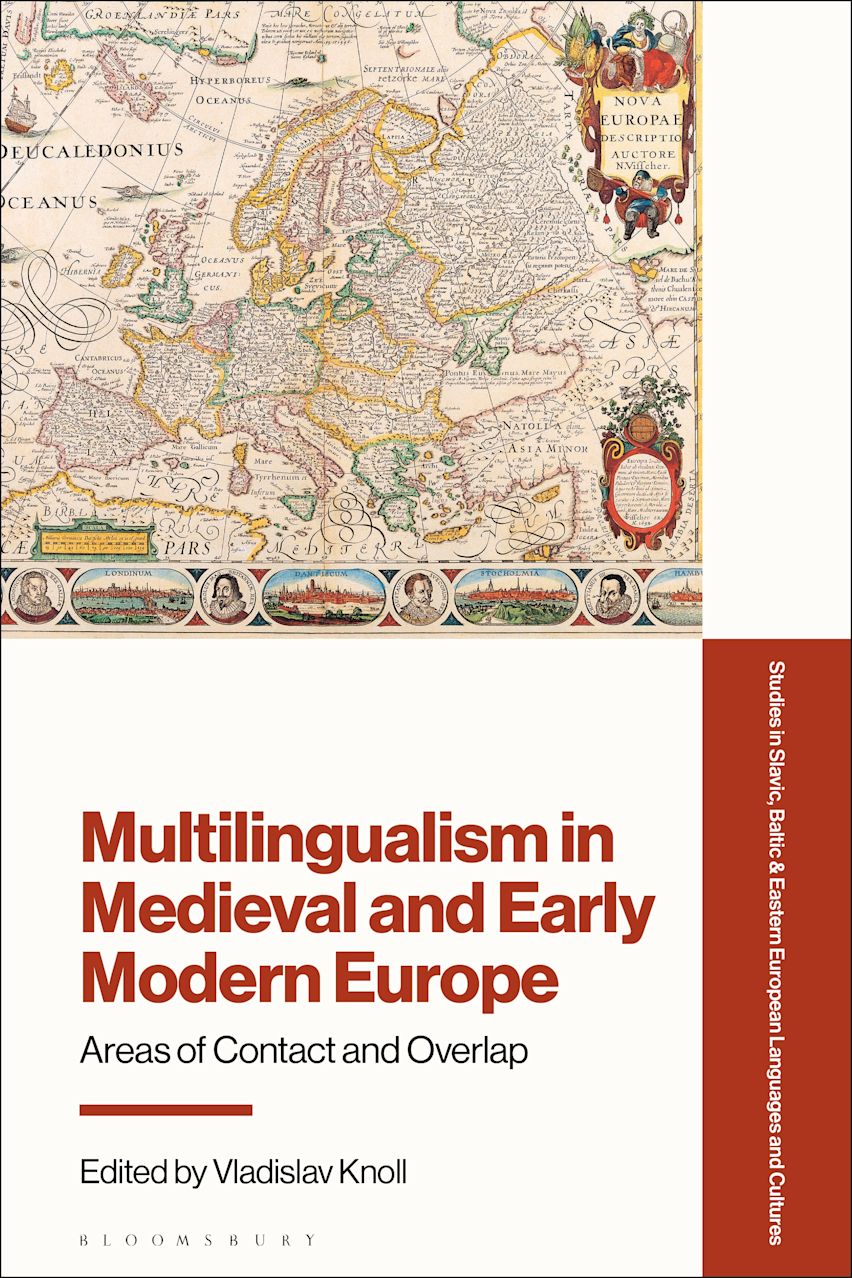
Multilingualism in Medieval and Early Modern Europe
Areas of Contact and Overlap
Buying pre-order items
Ebooks and Audiobook
You will receive an email with a download link for the ebook or audiobook on the publication date.
Payment
You will not be charged for pre-ordered books until they are available to be shipped. Pre-ordered ebooks will not be charged for until they are available for download.
Amending or cancelling your order
For orders that have not been shipped you can usually make changes to pre-orders up to 72 hours before the publishing date.
Payment for this pre-order will be taken when the item becomes available
- Delivery and returns info
-
Free US delivery on orders $35 or over
Description
This interdisciplinary work explores historical multilingualism viewed from the early Middle Ages to the beginning of the seventeenth century. It presents research methodologies related to different cultural areas of Europe covered by several classical languages. This approach aims to dispel the common misconception that Western Europe, dominated by Latin culture, constituted the only part of medieval Europe.
The volume consists of an extended introduction and twelve chapters reflecting different correlations of multilingualism and language contact in Western, Central, and Southeastern Europe during the period under study. The authors discuss various aspects of the relationship between classical languages and vernaculars, as well as the overlap of cultural areas. They adopt different points of view (multilingual texts, translations, language contacts, historical records of multilingualism), research methods, and applications of primary sources. Written by both seasoned scholars and young researchers, the chapters present novel concepts and point the way forward for the study of multilingualism, focused on the British Isles, Central Europe, and Southeastern Europe from various perspectives.
The chapters discuss both itinerant (traveling) and static multilingualism, as well as the confrontation of different languages in different mutual relationships. For the pre-modern period, such relations are linked to the varied social (diastratic) and functional roles of two types of languages: classical and vernacular. The confrontation of more classical languages or languages belonging to different cultural areas often involves scriptal pluricentricity. The book deals with a wide range of classical languages: Arabic, Armenian, Church Slavonic, Greek, Hebrew, and Latin. The vernaculars discussed include (Old and Middle) Czech, (Old) English, (Early New High) German, (Middle) Hungarian, Old Norse, (Old and Middle) Polish, (Old) Romanian, (Vernacular Middle) Greek.
Table of Contents
Part I: Overlaps of Cultural Areas
2. The “Peripatetic Multilingualism” in Early Medieval Europe: The Case of Slavic and Syriac
3. Are the Slavic Glosses of Avraham ben Azriel Upper Sorbian?
4. Language Contact in Late-medieval Transylvania: A Sociolinguistic Approach to Church Inscriptions
5. Cyrillic Printing in Transylvania and Wallachia: Between Church Slavonic and Romanian
6. Siquidem ?e?d??ta? ???d??: Switching to Humanist Greek in Neo-Latin Poetry of Bohemian Origin (ca. 1500–1622)
Part II: Classical Languages and Vernaculars
7. External Possession in Medieval Greek Vernacular Sources
8. The Book Exodus in the Old English Heptateuch Concerning the Translation of Female References
9. Looking for the Perfect Equivalents of the Latin Rare Words: The Vernacular Glosses in the Didactic Work of Middle Ages Cornutus
Part III: Vernaculars in Contact
10. Verb musiti/musiec “must” and its Functional Equivalents in Czech and Polish Translations of the New Testament, 1506–1632
11. From Lowe Men to Lowe of Herte: Additional Notes on the Gradual Semantic Development of Scandinavian lexical Borrowings in Old and Middle English: Anglo-Scandinavian Lexical Relations
Product details

| Published | Jan 21 2027 |
|---|---|
| Format | Hardback |
| Edition | 1st |
| Pages | 320 |
| ISBN | 9781666965605 |
| Imprint | Bloomsbury Academic |
| Illustrations | 20 b/w photos |
| Dimensions | 9 x 6 inches |
| Series | Studies in Slavic, Baltic, and Eastern European Languages and Cultures |
| Publisher | Bloomsbury Publishing |
Reviews
Related Titles