The New-Wave Cinema
Evolution of Society’s Art System


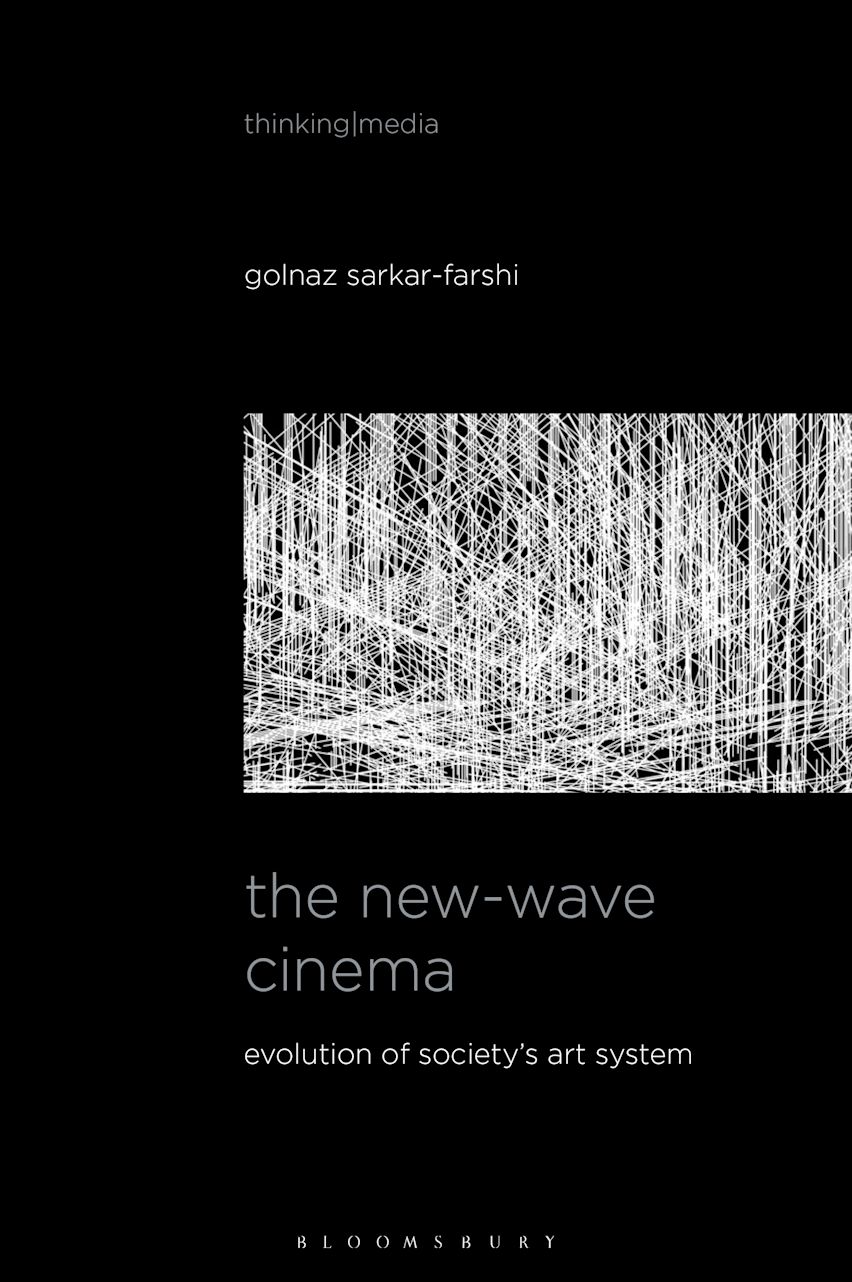
The New-Wave Cinema
Evolution of Society’s Art System
Buying pre-order items
Ebooks and Audiobook
You will receive an email with a download link for the ebook or audiobook on the publication date.
Payment
You will not be charged for pre-ordered books until they are available to be shipped. Pre-ordered ebooks will not be charged for until they are available for download.
Amending or cancelling your order
For orders that have not been shipped you can usually make changes to pre-orders up to 72 hours before the publishing date.
Payment for this pre-order will be taken when the item becomes available
Description
This book introduces a novel conceptualization of “new-wave cinema” as a borderless phenomenon, akin to a “wave” that crashes upon established film aesthetics in a certain society. Using Niklas Luhmann's systems theory, the book explores the correlation between the rise of new-wave cinema and the societal conflicts contemporaneous with its inception.
The term “new-wave cinema,” historically attributed by film critics to specific film collections within different societies, has lacked universal applicability in film scholarship. This book identifies the defining criterion of the new wave not solely within its specific aesthetics but in the transformative “break” that these aesthetic properties effectuate upon the prevailing filmic communication. This “break” extends beyond singular films, manifesting within a substantial cohort, thereby justifying the label “wave.” Notably, this “wave” does not materialize as a result of a collective decision by filmmakers but rather in correlation with the societal “contradictions and conflicts” prevailing during the emergence of new-wave films.
This book delineates how the resonance of societal contradictions and conflicts in films, as a subsystem of art, can catalyze three different reactions to existing aesthetic and narrative traditions, thereby giving birth to new cinematic waves. The analysis concentrates on three paradigmatic new-wave cinemas spanning three continents, namely New German Cinema, New Hollywood, and New Iranian Cinema, illustrating the universality of its thesis despite the aesthetic differences among the cinematic movements commonly labeled as “new wave” in film scholarship.
Accessibility Information
Additional accessibility information
- EPUB 3.0
- Conforms with the requirements of EPUB Accessibility Spec v1.1
- WCAG level AA
- WCAG v2.2 compliant
- accessibility@bloomsbury.com
Hazards
The publication contains no hazards
Support for non-visual reading
- No accessibility features offered by the reading system, device or reading software are disabled or otherwise unusable with the product
- Has alternative text descriptions for images
Visual adjustments
Appearance of the text and page layout can be modified according to the capabilities of the reading system (font family and size, spaces, as well as color of background and text)
Navigation
- Page list to go to pages from the print source version
- Elements such as headings, tables, etc for structured navigation
- All or substantially all textual matter is arranged in a single logical reading order
- Content is enhanced with ARIA roles to optimize organization and facilitate navigation
- Purposes of all links are made clear
Rich content
Language tagging provided
Table of Contents
Preface
Acknowledgements
Introduction
Part 1: A Systems-Theoretical Perspective on Film
1.1. Introduction to Systems Theory of Society
1.2. Film as a Subsystem of Art
Part 2: The Wave-Like Evolution of Film Art
2.1. New German Cinema
2.2. New Hollywood
2.3. New Iranian Cinema
Conclusion
References
Filmography
Notes
Index
Product details

| Published | Jun 11 2026 |
|---|---|
| Format | Ebook (Epub & Mobi) |
| Edition | 1st |
| Pages | 272 |
| ISBN | 9798765125144 |
| Imprint | Bloomsbury Academic |
| Illustrations | 61 bw illus + 3 line drawings |
| Series | Thinking Media |
| Publisher | Bloomsbury Publishing |
Reviews

ONLINE RESOURCES
Bloomsbury Collections
This book is available on Bloomsbury Collections where your library has access.
Related Titles