The Oxford University Socratic Club, 1942–1972
A Life
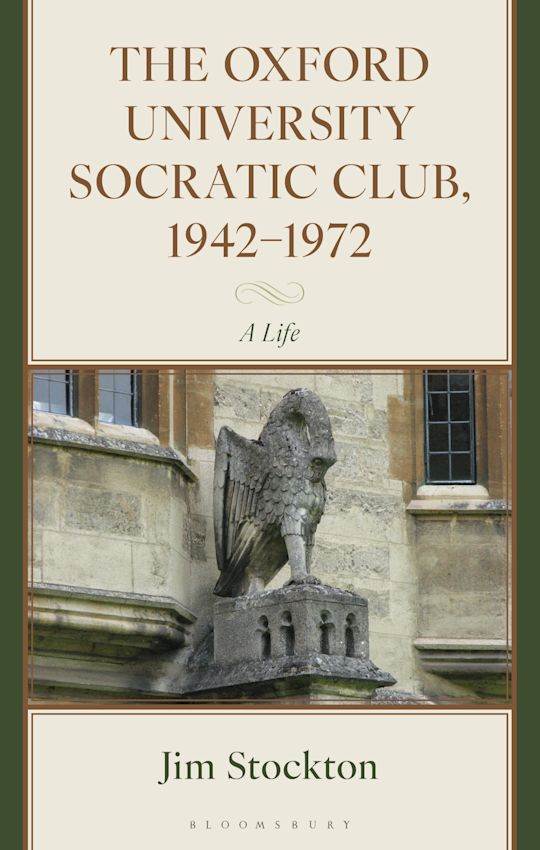


The Oxford University Socratic Club, 1942–1972
A Life
Description
Through a comprehensive account of the Socratic Club's history, Jim Stockton draws focus to the significant role that the club played in shaping mid-twentieth century philosophical and theological debate.
Although the Socratic Club is most often identified with its first club president, C. S. Lewis, Stockton demonstrates that the club was much more than an apologetic platform for Christocentric and conservative views. As an inter-disciplinary forum, with a preference for theological and philosophical arguments, the club's history is a microcosm of the debates that occurred between many of the more widely recognized intellectuals of the previous century. The book delves into the club's most prominent participants, such as G.E.M. Anscombe, A.J. Ayer, Austin Farrer, Philippa Foot, Richard M. Hare, Alasdair MacIntyre, Donald M. MacKinnon, Eric Mascall, Basil Mitchell, Iris Murdoch, Gilbert Ryle, Mary Warnock, Bernard Williams, Charles Williams, and many others. Through an exploration of the club's minutes and a wide variety of secondary material, each chapter of this book offers insight on the Socratic Club's role in addressing concerns related to the interaction of Christian ideology and academic philosophy.
Table of Contents
Preface
1. Chaplain Stella Aldwinckle and Mr. C. S. Lewis
2. A Strong First Year
3. Advancing the Socratic Club's Christian Identity
4. Challenging Current Trends in Oxford Philosophy
5. Finding the Club's Place Amid Oxford's Post War Boom
6. The Anscombe-Lewis Debate of 2 February 1948
7. A Little Less Christian and a Bit More Philosophical
8. Advancing the Socratic Club's Philosophical Identity
Conclusion: Reviewing the Socratic Club's Success
Index
Product details

| Published | Feb 05 2026 |
|---|---|
| Format | Ebook (Epub & Mobi) |
| Edition | 1st |
| Pages | 240 |
| ISBN | 9781978762602 |
| Imprint | Bloomsbury Academic |
| Publisher | Bloomsbury Publishing |
Reviews

ONLINE RESOURCES
Bloomsbury Collections
This book is available on Bloomsbury Collections where your library has access.
Related Titles