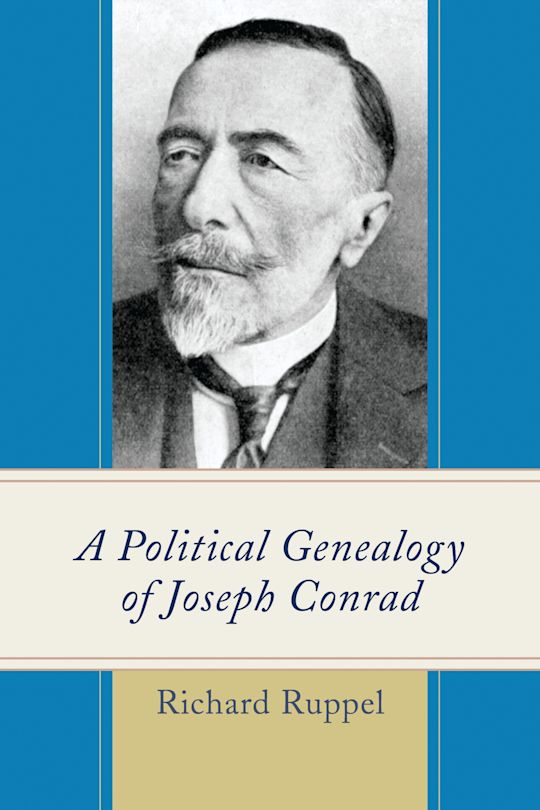

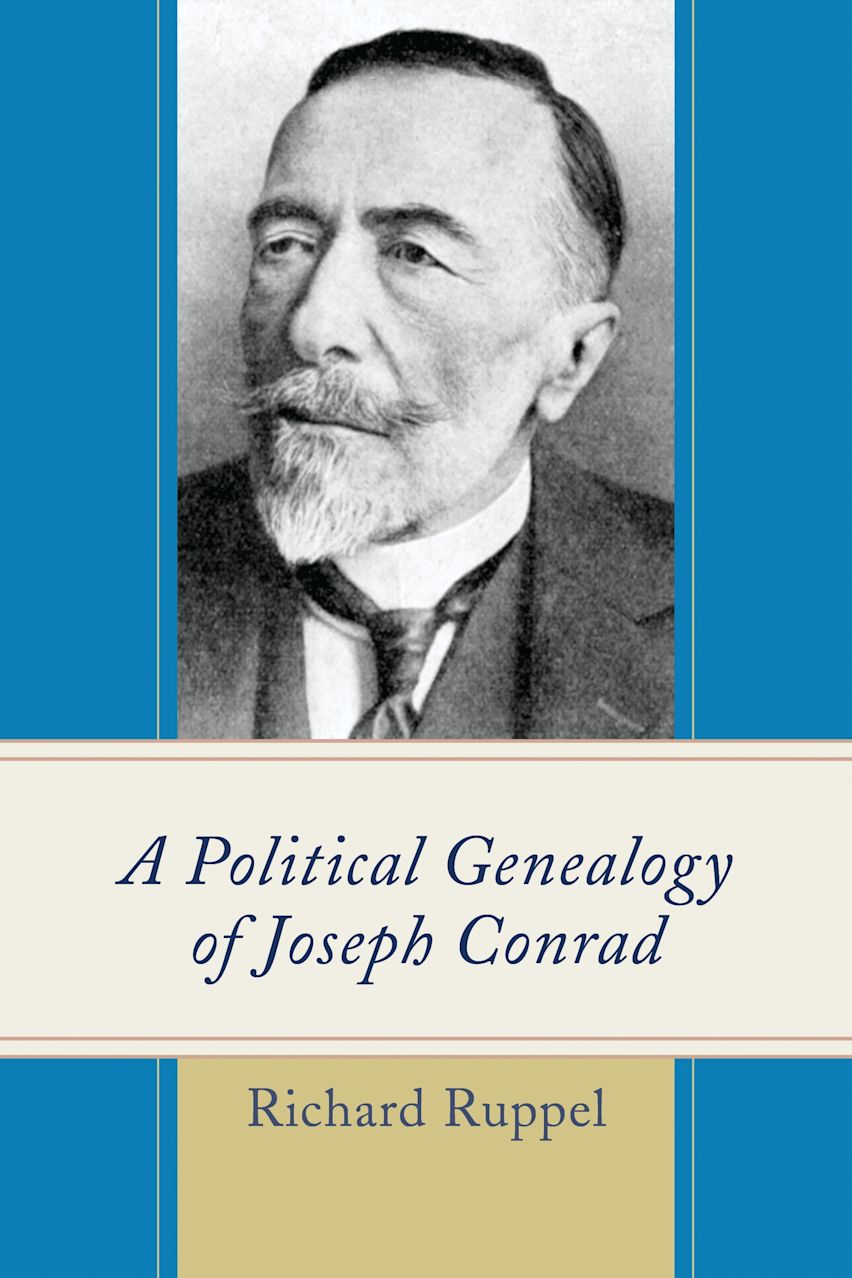
A Political Genealogy of Joseph Conrad
Description
Józef Teodor Konrad Korzeniowski, who gradually transformed himself into the English writer, Joseph Conrad, was a mercurial personality. He left Poland for the sea, though he had no experience with salt water. He left the Polish language for French, and then for English. He attempted suicide at the age of twenty. He invested in various schemes and lost his inheritance. He married an English typist nearly sixteen years younger than himself with whom he had nothing in common. He worked as a writer though he made no money through all the years of his most important work and though he experienced terrible psychological breakdowns after completing each novel. He was warm with his friends, ingratiating with influential strangers, but also intensely irritable and easily offended.
His work is as varied and changeable as his personality, from his first two, emotionally intense Malay novels, to the stolid and confident Nigger of the “Narcissus” and “Typhoon”; from the coldly ironic “Outpost of Progress” to the nightmarishly subjective Heart of Darkness; from the leisurely, panoramic visions of Nostromo to the tautly nervous, claustrophobic ironies in The Secret Agent.
Despite the extraordinary thematic and tonal range of his work, critics have imposed a stable political perspective on his fiction—most often an organic conservatism, influenced by his Polish background. This is understandable; until recently, a critic’s role has been to impose order on an artist’s creations.
The approach in this book is different. Drawing on the work of Michel Foucault and Jean-Francois Lyotard, especially on the latter’s critique of what he called “the grand narrative,” A Political Genealogy of Joseph Conrad shows how Conrad’s politics were always radically contingent on audience, contemporary events, and, especially, genre. While the political perspective in each of his stories and novels may be more-or-less coherent and consistent, there is no consistency throughout his work.
A Political Genealogy of Joseph Conrad is the first book devoted exclusively to Conrad’s politics since the 1960s.
Table of Contents
Acknowledgments
Introduction: Conrad’s Radically Contingent Politics
Chapter 1: The Nigger of the ‘Narcissus’(1897), Almayer’s Folly (1895), & An Outcast of the Islands (1896)
Chapter 2: Lord Jim (1900)
Chapter 3: Heart of Darkness (1899-1900)
Chapter 4: Nostromo: A Tale of the Seaboard (1904)
Chapter 5:“An Anarchist” (1906), “The Informer” (1906), & The Secret Agent (1907)
Chapter 6: A Personal Record (1912) & Under Western Eyes (1911)
Chapter 7: Chance (1912)
Bibliography
About the Author
Product details
| Published | Dec 11 2014 |
|---|---|
| Format | Ebook (Epub & Mobi) |
| Edition | 1st |
| Pages | 166 |
| ISBN | 9780739178256 |
| Imprint | Lexington Books |
| Publisher | Bloomsbury Publishing |
Reviews
Related Titles