
Payment for this pre-order will be taken when the item becomes available
Description
'Chakrabarti has crafted a rich psychological study that's also a shrewd portrait of the theatre as an institution - its vanities and strange conventions, its politics and sense of community, the opportunities it presents for both progress and blinkered traditionalism.' EVENING STANDARD
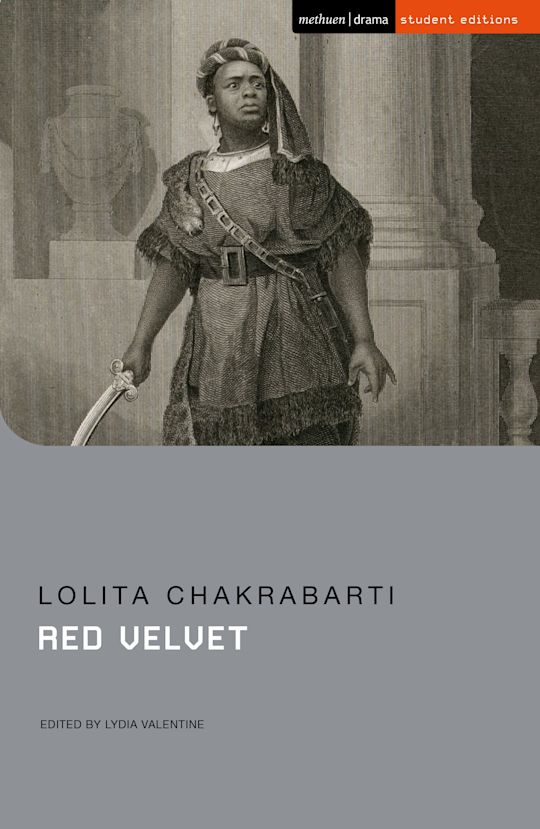
Theatre Royal, Covent Garden, 1833. Edmund Kean, the greatest actor of his generation, has collapsed on stage while playing Othello. A young Black American actor has been asked to take over the role. But as the public riot in the streets over the abolition of slavery, how will the cast, critics and audience react to the revolution taking place in the theatre?
Red Velvet uses imagined experiences based on the true story of Ira Aldridge, a Black American actor who, in the nineteenth century, built an incredible reputation on the stages of London and Europe.
This Student Edition contains commentary and notes by Lydia Valentine, Research Fellow and Lecturer at Shakespeare's Globe.
Table of Contents
Who was Ira Aldridge?
Historical, Social and Cultural Contexts
> Race, Shakespeare and Othello
> Race and Performance in the Nineteenth Century
> Black Shakespeare: Making Ira Aldridge Visible
Red Velvet in Performance
> Temporality
> Sound
> Metatheatricality
> Staging the Characters
Performance History and Critical Reception
Themes
> Tradition
> Anti-Black Racism and Stereotypes of Black Masculinity
> Forgotten Histories
> Englishness and National Identity
RED VELVET
Notes
Product details

| Published | Sep 17 2026 |
|---|---|
| Format | Ebook (PDF) |
| Edition | 1st |
| Pages | 144 |
| ISBN | 9781350497696 |
| Imprint | Methuen Drama |
| Series | Student Editions |
| Publisher | Bloomsbury Publishing |
Reviews
Related Titles