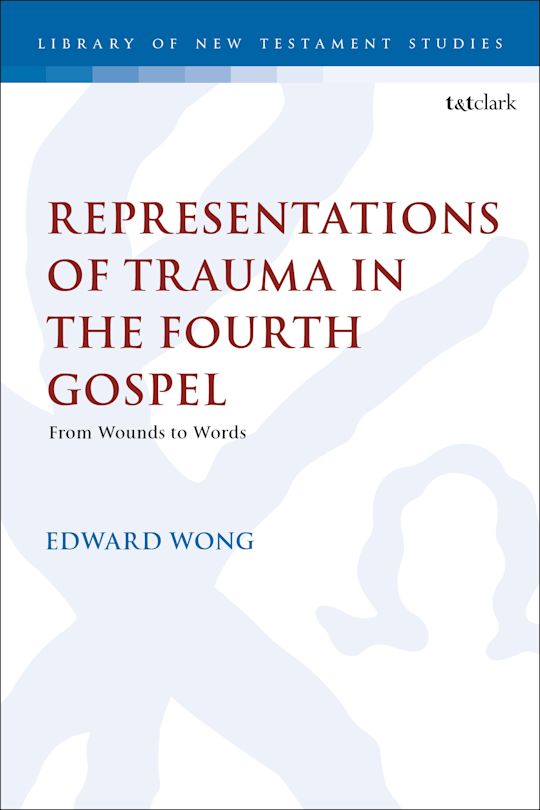

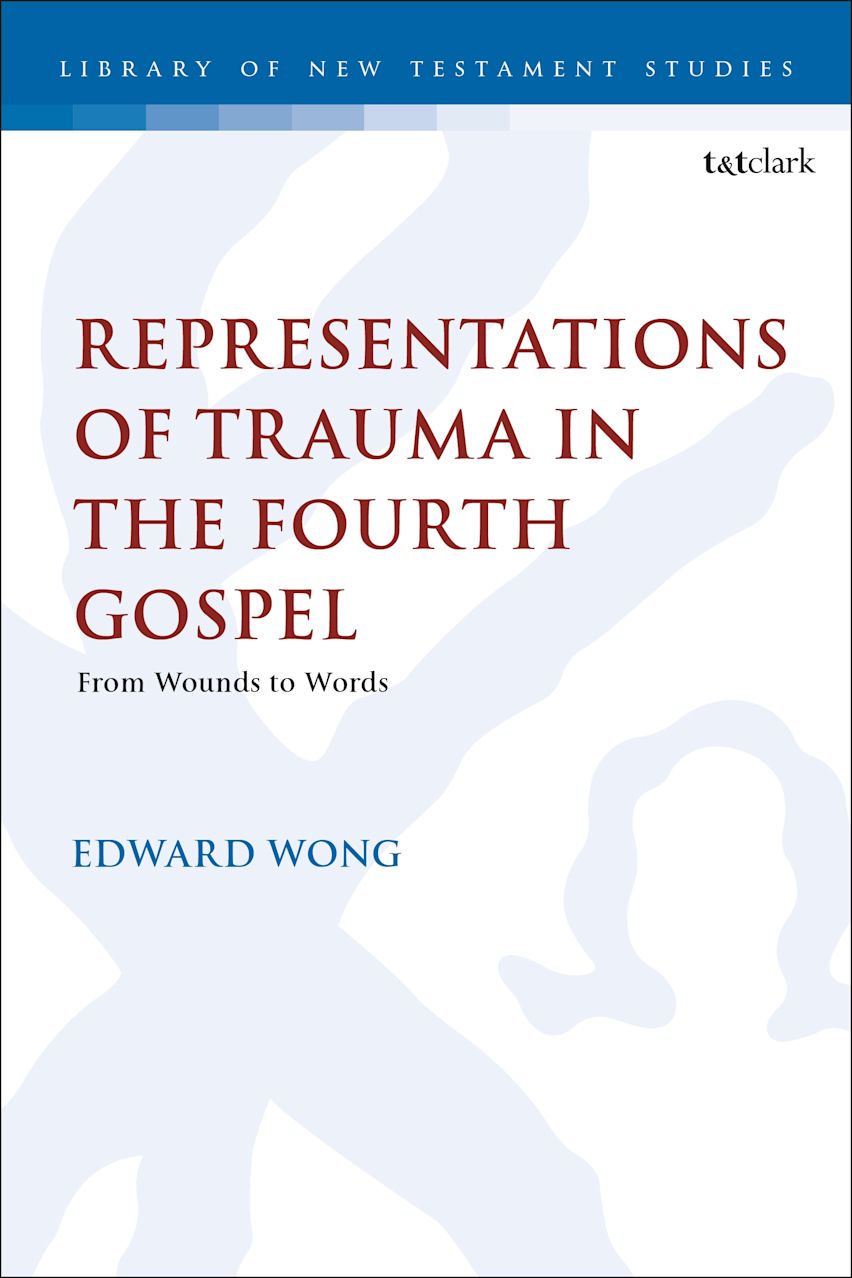
Representations of Trauma in the Fourth Gospel
From Wounds to Words
Buying pre-order items
Ebooks and Audiobook
You will receive an email with a download link for the ebook or audiobook on the publication date.
Payment
You will not be charged for pre-ordered books until they are available to be shipped. Pre-ordered ebooks will not be charged for until they are available for download.
Amending or cancelling your order
For orders that have not been shipped you can usually make changes to pre-orders up to 72 hours before the publishing date.
Payment for this pre-order will be taken when the item becomes available
Description
Edward Wong provides the first in-depth analysis of trauma as an interpretive lens for understanding the Fourth Gospel and offers a fresh solution to this long-standing puzzle of the text's seemingly “anti-Jewish” rhetoric. The Fourth Gospel, renowned for its profound theological significance in Christianity, is also the subject of a contentious hermeneutical debate due to its overwhelmingly negative portrayal of “the Jews.” While scholars have traditionally explained this rhetoric in terms of either historical events or the evangelist's strategic aims, Wong highlights the interruptive impact of trauma on communal identity and the Gospel's composition. He thus argues that the Gospel's narrative and polemical tone can be understood as both a pathological and cathartic response to perceived intra-group tensions.
Drawing on trauma theory and interdisciplinary insights, Wong demonstrates how trauma permeates the Gospel's composition through distinct linguistic patterns, spatial aporias, and metaphorical language-particularly the imagery of light/darkness and themes of consumption. His analysis shows how these features serve as literary mechanisms for processing trauma and conflict-related distress. Wong further argues that the Gospel functions as a rhetorically charged “trauma narrative” by constructing roles of victimhood and perpetration, reshaping collective identity, and recalibrating felt tensions through a theological framework that cathartically envisions redemption for Jesus-followers, while pronouncing retribution against alleged perpetrators. In doing so, the claimed past of the Gospel functions as a resource for Jesus-followers amidst perceived conditions of adversity.
Accessibility Information
Additional accessibility information
- PDF/UA-2, 1.4
- accessibility@bloomsbury.com
Hazards
The publication contains no hazards
Support for non-visual reading
Has alternative text descriptions for images
Navigation
- Page list to go to pages from the print source version
- Elements such as headings, tables, etc for structured navigation
- All or substantially all textual matter is arranged in a single logical reading order
Table of Contents
Acknowledgments
Note on Translation
List of Abbreviations
Part One:The Question of Intra-Group Tensions and Trauma in the Fourth Gospel
1. Introduction
2. Trauma Theory, Method and Definitions
Part Two: Trauma Aesthetics
3. Trauma and Editorial Stress: A Quantitative Analysis
4. Echoes of Trauma
Part Three: Claiming Trauma and Reorienting Trauma
5. Claiming Trauma
6. Reorienting Trauma
7. Summary and Conclusion
Bibliography
Index
Product details
| Published | Nov 12 2026 |
|---|---|
| Format | Ebook (PDF) |
| Edition | 1st |
| Pages | 240 |
| ISBN | 9780567730947 |
| Imprint | T&T Clark |
| Series | The Library of New Testament Studies |
| Publisher | Bloomsbury Publishing |
Related Titles