
- Home
- ACADEMIC
- Politics & International Relations
- American Government and Politics
- A Social Theory of Congress
You must sign in to add this item to your wishlist. Please sign in or create an account
Description
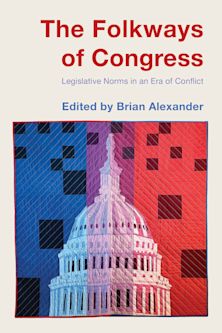
What is the role that norms play in the U.S. Congress? At a time of unprecedented partisanship and high-profile breaches of legislative norms in the modern Congress, the relationship between norms and the functioning of the institution is a growing and pressing concern. Despite the importance of the topic, recent scholarship has not focused on congressional norms. Meanwhile, previous research leaves open many relevant questions about the role of norms in the Congress of the twenty-first century.
A Social Theory of Congress brings norms back in to the study of Congress by defining what are legislative norms, identifying which norms currently exist in the U.S. Congress, and examining the effects that congressional norms have. This book provides a new research approach to study congressional norms through a comprehensive review of previous scholarship and a combination of interviews, survey research, and analysis of member behavior. What’s more, an innovative theoretical framework — a social theory of Congress — provides new perspectives in the study of legislatures and political behavior.
The findings are striking. Norms of cooperation are surprisingly alive and well in an otherwise partisan Congress. But norms of conflict are on the rise. In addition, norms of a changing culture are affecting how members understand their role as lawmakers and in their interactions among one another. Together, these findings suggest that norms play an important role in the functioning of the legislature and as norms evolve so too does the performance of Congress in American democracy.
Table of Contents
Chapter 2: A Constructivist Approach to Congressional Norms
Chapter 3: Historical Norms and the Modern Congress: A Survey
Chapter 4: It Could Be Worse: Enduring Norms of Cooperation
Chapter 5: Age of Resistance: Emerging Norms of Conflict
Chapter 6: Out of the Madmen Era into the New: Norms of a Changing Culture
Chapter 7: Between Cooperation and Conflict
Product details
| Published | Apr 09 2021 |
|---|---|
| Format | Ebook (Epub & Mobi) |
| Edition | 1st |
| Pages | 200 |
| ISBN | 9781793601285 |
| Imprint | Lexington Books |
| Illustrations | 5 tables; 1 graphs; |
| Publisher | Bloomsbury Publishing |
About the contributors
Reviews
-
Alexander has aided the study of Congress by systematically updating research on congressional norms. which scholars have done only intermittently since D. R. Matthews wrote of the Senate's “folkways” in a 1959 article.... Alexander makes the reasonable claim that norms are powerful not just because of the consequences that members face for violating them but also because norms are constitutive: they shape the ways members of Congress perceive their role. It is difficult to conclude whether the author has proven the value of this constructivist approach to studying Congress, but his arguments are important, as are his specific findings. Highly recommended. Undergraduates through faculty and professionals.
Choice Reviews
-
In this provocative new look at Congress, Brian Alexander shows us how cooperation and conflict coexist internally, with the norms of the former still predominant but the norms of the latter more routine and ascendant in the 21st Century.
Donald R. Wolfensberger, Director of The Congress Project, The Woodrow Wilson International Center for Congress, Director of The Congress Project, The Woodrow Wilson International Center for Scholars
-
A Social Theory of Congress reminds us that legislative norms are real, and therefore any effort to understand why legislators behave as they do needs to take account of how congresspersons understand right and wrong within their professions.
Kevin Kosar, American Enterprise Institute
-
Few scholars have paid close attention to the powerful role that norms play in Congress. In his smart, theoretically-grounded book A Social Theory of Congress, Brian Alexander identifies key congressional norms and shines new light on the ways they shape what lawmakers do. Alexander's fresh perspective on Congress should be read by every serious student of American politics.
Matthew N. Green, Catholic University of America
-
Brian Alexander’s study of changing norms in the United States Congress is a welcome addition and much-needed update to the literature on the congressional norms. His painstaking work to document the persistence of norms of cooperation and to uncover new norms of conflict in both the U.S. House and U.S. Senate provides a valuable service to scholars and students by revealing the ways in which members understand what it means to serve in the national legislature. In so doing, he demonstrates that norms shape both members’ personal and representative behaviors as well as influence the content and quality of the laws our Congress crafts, and suggests important considerations about the impact of changing norms.
Lauren C. Bell, Randolph-Macon College
-
Alexander's important new book studies how the unwritten rules of Congress -- congressional norms -- have changed, evolved, or been re-written in an era of hyperpartisanship, polarization, and intense institutional strain. Alexander shows that while political conflict is undeniably on the rise, lawmakers still rely heavily on norms of cooperation to get things done. This book is an important read for any congressional observer interested in a deeper understanding of how Congress works and why lawmakers behave as they do.
Casey Burgat, Graduate School of Political Management, The George Washington University
ONLINE RESOURCES
Bloomsbury Collections
This book is available on Bloomsbury Collections where your library has access.