- Home
- ACADEMIC
- Sociology
- Cultural Sociology
- Structures of Consciousness and Civilizational Processes
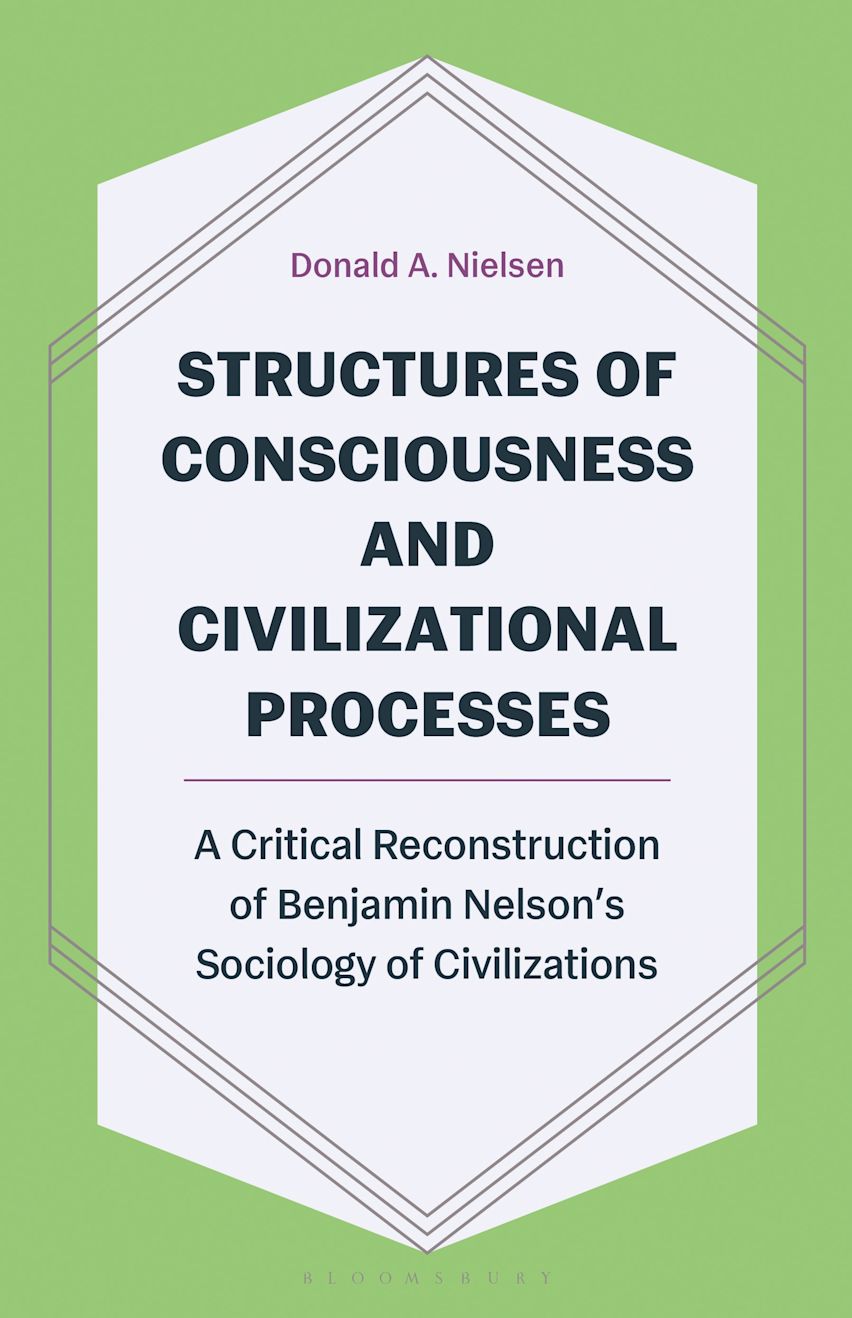
Structures of Consciousness and Civilizational Processes
A Critical Reconstruction of Benjamin Nelson’s Sociology of Civilizations
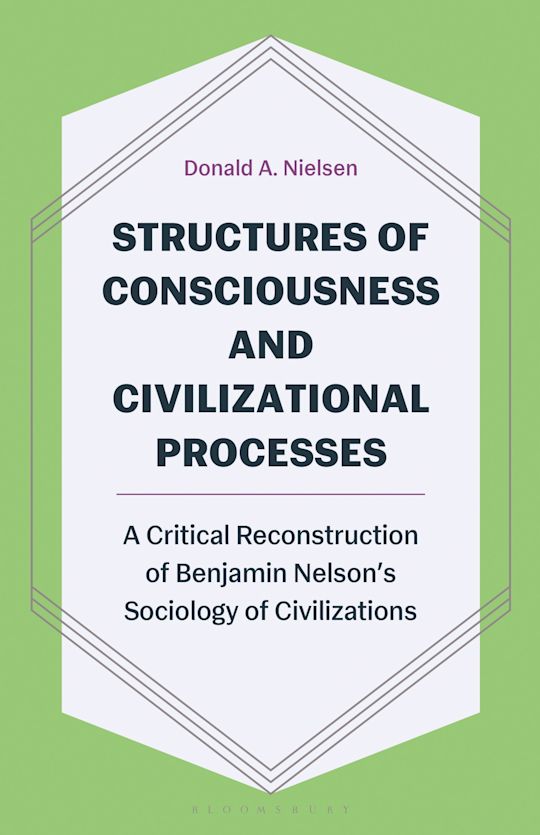
Structures of Consciousness and Civilizational Processes
A Critical Reconstruction of Benjamin Nelson’s Sociology of Civilizations

Payment for this pre-order will be taken when the item becomes available
You must sign in to add this item to your wishlist. Please sign in or create an account
Description
As societies around the globe undergo rapid change, Benjamin Nelson's theories help explain how and why civilizations evolve.
This book offers a full-length, comprehensive analysis of Benjamin Nelson's ideas and historical studies, exploring his civilization-analytic perspective, its intricate ties to Max Weber's theories, and Nelson's arguments about the major historical phases shaping Western European civilization. Donald A. Nielsen argues that Nelson's work centers on religious and cultural universalism, reconstructing Nelson's thesis that 12th-century Europe experienced an axial shift in consciousness toward more rationalized, universalistic cultural orientations. Rather than focusing on the origins of modernity, Nelson examined revolutionary changes in structures of consciousness and civilizations, including six ongoing “revolutions” he identified. Nielsen unpacks Nelson's view of civilizational crises and demonstrates that his theories are rooted in a vision of human life that values lived experience and expression within changing historical contexts. By highlighting how Nelson's theories illuminate the dynamics of cultural universalism and structural transformations across historical contexts, this book provides readers a conceptual framework for analyzing civilizational change.
Table of Contents
Introduction
Chapter 1: Civilizational Revolutions and Breaking Points in the Histories of Structures of Conscience and Consciousness
Chapter 2: In Search of Concepts and an Analytical Framework
Chapter 3: Historical Sociology, Social Theory and Civilizational Analysis: Shifting Conceptualizations and Theoretical Frameworks
Chapter 4: Revolutionary Transformations and Breaking Points in the History of Western European Civilization
Chapter 5: Crises of Civilizations: Symptoms and Diagnoses
Chapter 6: Conclusion: Nelson's Unique Vision of Civilizations and Their Discontents
References
Index
About the Author
Product details

| Published | Jun 25 2026 |
|---|---|
| Format | Ebook (PDF) |
| Edition | 1st |
| Pages | 248 |
| ISBN | 9798216381990 |
| Imprint | Bloomsbury Academic |
| Publisher | Bloomsbury Publishing |
About the contributors
Reviews
-
Historical sociology is on the rise, but some of the crucial figures of its development after Max Weber remain curiously neglected. This book offers a thoroughly researched reconstruction of one of them, Benjamin Nelson, who went far beyond Weber in his understanding of universalism and civilizational change.
Hans Joas, Humboldt University, Berlin, Germany and Committee on Social Thought, University of Chicago, USA
-
This book is a welcome and thought-provoking contribution; it engages with the work of an important but neglected figure in the history of civilizational theory. Nielsen´s generous but critical discussion of Benjamin Nelson´s unfinished project is more comprehensive than any other treatment so far, and particularly good on the conflicted and transformative role of ideas in history. The book will be essential reading for all those interested in the comparative study of civilizations.
Johann P. Arnason, Emeritus Professor of Sociology, La Trobe University, Australia
-
An underacknowledged body of thought on modernity, Benjamin Nelson's original and provocative insights into civilizations, science and culture are brought to life in the deft hands of Donald Nielsen. This book will be of immense value to anyone encountering civilizational analysis for the first time, as it will equally reward those returning to Nelson's work. Above all, Nielsen demonstrates the unique relevance of historical sociology and civilizational analysis for our troubled and crisis-ridden times.
Jeremy Smith, Professor of Sociology, Federation University, Australia
-
Donald Nielsen offers in this volume, following a rigorous definition of concepts delineated from the broad ranging works of Benjamin Nelson, a powerful analytic framework and an anti-positivist set of concepts that range across a spectrum from historical sociology to social theory. Moreover, as Nielsen demarcates with great clarity, Nelson's theorizing further examines concepts and procedures that provide superb analytic frameworks for the study of civilizations. In the process it offers an array of cases that explore succinct guidelines for the conceptualization of Western civilization's particular development and for the formation of civilization-specific “structures of consciousnesss.” With his powerful concepts providing a firm methodology, Nelson hopes to provide values-based guidance for researchers to investigate the manner in which different civilizations form viable pathways that stress ethics rooted in universalization .
Stephen Kalberg, Emeritus Professor of Sociology, Boston University, USA