
- Home
- ACADEMIC
- Film & Media
- Film Directors
- Synecdoche, New York
Payment for this pre-order will be taken when the item becomes available
- Delivery and returns info
-
Free US delivery on orders $35 or over
You must sign in to add this item to your wishlist. Please sign in or create an account
Description
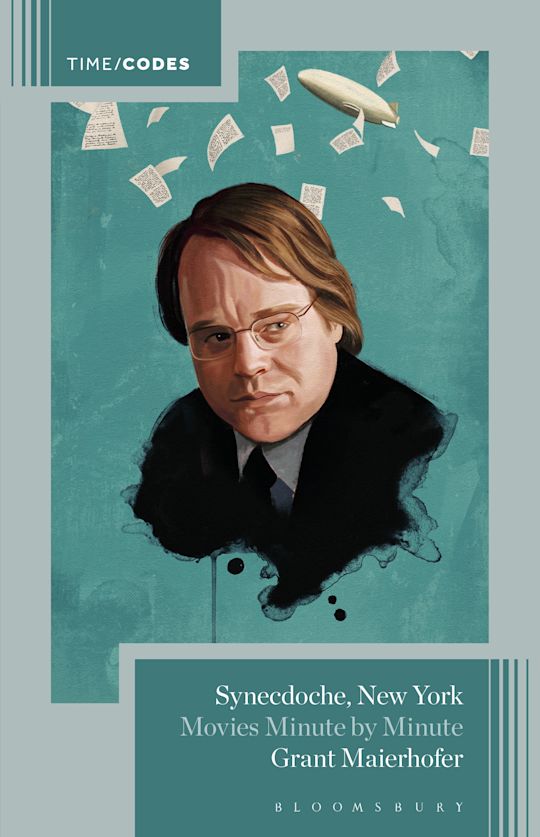
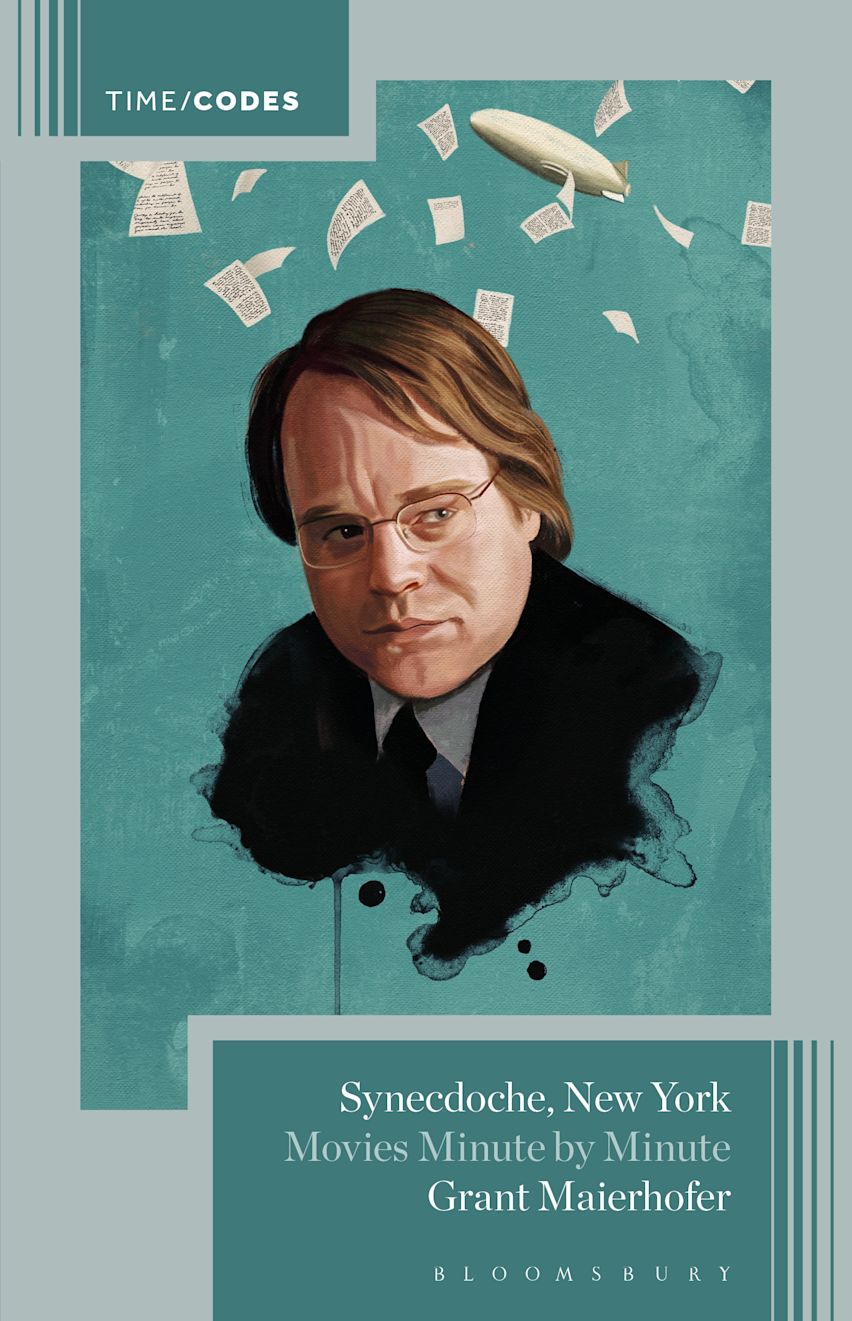
A minute-by-minute analysis of Charlie Kaufman's Synecdoche, New York (2008).
Blending film criticism with creative nonfiction, each book in the Timecodes series focuses on one film, exploring it minute by minute beginning with minute one, and ending with the final minute before the closing credits.
In the canon of Charlie Kaufman written/directed films, which include Being John Malkovich, Adaptation, and Eternal Sunshine of the Spotless Mind, Synecdoche, New York is perhaps the purest distillation of his aesthetics as it follows the protagonist, Caden Cotard, a theater director who struggles with his work and women as he creates a life-size replica of New York City inside a warehouse as part of his new play.
This book elevates this signature film to a higher place in the pantheon of Kaufman films with a nuanced, compassionate reading of a film that has a reputation for being removed and cold.
Table of Contents
Minutes 1-119
Endnotes
Index
Product details

| Published | Jun 11 2026 |
|---|---|
| Format | Hardback |
| Edition | 1st |
| Extent | 152 |
| ISBN | 9798765188453 |
| Imprint | Bloomsbury Academic |
| Dimensions | 8 x 5 inches |
| Series | Timecodes |
| Publisher | Bloomsbury Publishing |
About the contributors
Reviews
-
Grant Maierhofer's Synecdoche, New York is by no means another volume of contemporary cinema criticism but an attempt to aesthetically exhaust Charlie Kaufman's film, as in Georges Perec's book about a place in Paris. In the manner of the Nouvelle Roman, Oulipo, and conceptualist writing, the mandatory "minute by minute algorithm" is adapted by Maierhofer here as a style tool for investigating his experiential relationship with the film - highlighting the ways in which that experience evolved across time and got emotionally and intellectually entangled with his biography and his art. The result is an outstanding reflection on an extraordinary film. Brilliantly arranged for turning the "abstract timer" into a synchronization device to evoke the film's original rhythm, each "minute" of Synecdoche, New York becomes an inspiration for the recalling, in each "minute-chapter" of the book, of Maierhofer's own experience as an artist: "What, in the end, does an artist have to offer the world?" - he writes in minute 42. This might be the question haunting both Kaufman's movie and this essay - and, perhaps, the traces of having failed to answer it properly is what remains of any artistic practice. As Maierhofer confesses in the preface: "I feel, I'd imagine, how John Cage must've felt when he'd solved the puzzle of reading Finnegans Wake by composing his own texts." Read the book. Watch the movie. Solve some puzzles.
Germán Sierra, Writer, Humanities Research Institute, University of Santiago de Compostela, Spain, and author of Zipf Maneuvers: On Non-Reprintable Materials (2025) and The Artifact (2018)
-
INT. DAY. Grant Maierhofer, a film critic, sits at his desk before the last page of his just-completed book on Synecdoche, New York. He thinks: Charlie Kaufman would find my situation, uh, Kaufmanesque: account for every minute of his directorial debut.
Phone rings. Grant picks up. There's a beat before he hears a voice.
CHARLIE KAUFMAN (hesitant, clears throat, then harried): David LaRocca sent me your new book-his copy, all marked-up, scribbled with marginalia, arrows, pluses, stars, you name it. Tells me the whole “minute-by-minute”-thing feels like something I would've come up with-you know, like life, minute-by-minute. Or making a replica of something to keep better track of it. For my film, let's say you did-a synecdoche for Synecdoche. My agent insists I can't endorse products that have to do with my work, but LaRocca doesn't have an agent, so he can sing your book's praises. Have to go, Catherine Keener is on the other line. Thanks for your attention. I'll be using your book from now on to get my bearings-in my own film. There's an endorsement!
GRANT (holds phone as line cuts).David LaRocca, Editor of The Philosophy of Charlie Kaufman, USA
-
Grant Maierhofer enters Charlie Kaufman's Synecdoche, New York through a mirror process shared by both the filmmaker and the film's Caden Cotard (Philip Seymour Hoffman). It is the work of living, and reliving, moment by moment, again and again. As you read/watch, Kaufman's anxieties reverberate with new feelings: How can I be an artist if I'm a parent? A parent if I'm an artist? What of marriage, love, sex, desire, illness, death? Simply: how can I live?
Zia Anger, Writer/Director, My First Film (2024), USA
-
A brilliant close reading of an endlessly fascinating film, this book is also a meditation on the necessary interplay of rigor and feeling in lasting formal invention. Maierhofer weaves together astute critical musings, searching personal interludes and crisp transcription in fresh, exciting ways. Charlie Kaufman has a deserving docent for the museum of his cinematic mind.
Sam Lipsyte, Professor of Creative Writing, Columbia University, USA, and author of No One Left to Come Looking For You (2022)